相关日志
-
-
分享
VIX Volatility
-
accumulation 2017-4-18 12:44
-
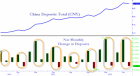
One view is that incorporating predictability in managerial skills is more important when investing in mutual funds than when investing in hedge funds. Another view is that the macroeconomic variables best suited for predicting hedge fund managerial skills differ from those best suited to mutual funds. VIX is constructed using the implied volatilities of a wide range of SP500 index options and is meant to be a forward looking measure of market risk. Some hedge fund investment styles (e.g. macro and trend following) outperform in times of high market volatility while others perform better in times of low market volatility. Hence, conditioning on VIX could allow one to better predict managerial skills by timing the performance of hedge fund investment styles over the volatility cycle.
-
个人分类: 金融工程|0 个评论
-
-
分享
tidyverse update
-
stzhao 2017-4-14 22:44
-
Over the couple of months there have been a bunch of smaller releases to packages in the tidyverse . This includes: forcats 0.2.0, for working with factors. readr 1.1.0, for reading flat-files from disk. stringr 1.2.0, for manipulating strings. tibble 1.3.0, a modern re-imagining of the data frame. This blog post summarises the most important new features, and points to the full release notes where you can learn more. (If you’ve never heard of the tidyverse before, it’s an set of packages that are designed to work together to help you do data science. The best place to learn all about it is R for Data Science .) forcats 0.2.0 forcats has three new functions: as_factor() is a generic version of as.factor(), which creates factors from character vectors ordered by appearance, rather than alphabetically. This ensures means that as_factor(x) will always return the same result, regardless of the current locale. fct_other() makes it easier to convert selected levels to “other”: See the full list of other changes in the release notes . stringr 1.2.0 This release includes a change to the API: str_match_all() now returns NA if an optional group doesn’t match (previously it returned “”). This is more consistent with str_match() and other match failures. There are three new features: In str_replace(), replacement can now be a function. The function is once for each match and its return value will be used as the replacement. New str_which() mimics grep() A new vignette ( vignette("regular-expressions") ) describes the details of the regular expressions supported by stringr. The main vignette ( vignette("stringr") ) has been updated to give a high-level overview of the package. See the full list of other changes in the release notes . readr 1.1.0 readr gains two new features: All write_*() functions now support connections. This means that that you can write directly to compressed formats such as .gz, bz2 or .xz (and readr will automatically do so if you use one of those suffixes). write_csv ( iris , "iris.csv.bz2" ) parse_factor(levels = NULL) and col_factor(levels = NULL) will produce a factor column based on the levels in the data, mimicing factor parsing in base R (with the exception that levels are created in the order seen). See the full list of other changes in the release notes . tibble 1.3.0 tibble has one handy new function: deframe() is the opposite of enframe(): it turns a two-column data frame into a named vector. df - tibble ( x = c ( "a" , "b" , "c" ) , y = 1 : 3 ) deframe ( df ) # a b c # 1 2 3
-
个人分类: R学习|0 个评论
-
-
分享
英语作文万能句—中间段落
-
accumulation 2015-3-29 16:13
-
十、中间段落万能句子 1. 相反,有一些人赞成……,他们相信……,而且,他们认为…… On the contrary , there are some people in favor of ___.At the same time , they say____. 2. 但是,我认为这不是解决……的好方法,比如……最糟糕的是…… But I don ” t think it is a very good way to solve ____.For example , ____.Worst of all , ___. 3. ……对我们国家的发展和建设是必不可少的,(也是)非常重要的。首先,……而且……,最重要的是…… ______is necessary and important to our country “ s development and construction.First , ______.What ” s more, _____.Most important of all,______. 4. 有几个可供我们采纳的方法。首先,我们可以…… There are several measures for us to adopt.First, we can______ 5. 面临……,我们应该采取一系列行之有效的方法来……一方面……,另一方面, Confronted with______ , we should take a series of effective measures to______.For one thing , ______For another , ______ 6. 早就应该拿出行动了。比如说……,另外……所有这些方法肯定会…… It is high time that something was done about it.For example._____.In addition._____.All these measures will certainly______. 7. 为什么……?第一个原因是……;第二个原因是……;第三个原因是……总的来说,……的主要原因是由于…… Why______? The first reason is that ______.The second reason is ______.The third is ______.For all this, the main cause of ______due to ______. 8. 然而,正如任何事物都有好坏两个方面一样,……也有它的不利的一面,象…… However, just like everything has both its good and bad sides, ______also has its own disadvantages, such as ______. 9. 尽管如此,我相信……更有利。 Nonetheless, I believe that ______is more advantageous. 10. 完全同意……这种观点(陈述),主要理由如下: I fully agree with the statement that ______ because______.
-
个人分类: Reading|0 个评论
-
-
分享
Introductory Econometrics for Finance
-
accumulation 2015-3-11 10:57
-
Chapter 8 This covers the important topic of volatility and correlation modelling and forecasting . This chapter starts by discussing in general terms the issue of non-linearity in financial time series . The class of ARCH (AutoRegressive Conditionally Heteroscedastic) models and the motivation for this formulation are then discussed. Other models are also presented, including extensions of the basic model such as GARCH, GARCH-M, EGARCH and GJR formulations . Examples of the huge number of applications are discussed, with particular reference to stock returns. Multivariate GARCH models are described, and applications to the estimation of conditional betas and time-varying hedge ratios, and to financial risk measurement, are given. Chapter 9 This discusses testing for and modelling regime shifts or switches of behaviour in financial series that can arise from changes in government policy, market trading conditions or microstructure , among other causes. This chapter introduces the Markov switching approach to dealing with regime shifts. Threshold autoregression is also discussed, along with issues relating to the estimation of such models. Examples include the modelling of exchange rates within a managed floating environment, modelling and forecasting the gilt--equity yield ratio, and models of movements of the difference between spot and futures prices. Chapter 10 This new chapter focuses on how to deal appropriately with longitudinal data -- that is, data having both time series and cross-sectional dimensions. Fixed effect and random effect models are explained and illustrated by way of examples on banking competition in the UK and on credit stability in Central and Eastern Europe. Entity fixed and time-fixed effects models are elucidated and distinguished. Chapter 11 The second new chapter describes various models that are appropriate for situations where the dependent variable is not continuous. Readers will learn how to construct, estimate and interpret such models, and to distinguish and select between alternative specifications. Examples used include a test of the pecking order hypothesis in corporate finance and the modelling of unsolicited credit ratings. Chapter 12 This presents an introduction to the use of simulations in econometrics and finance . Motivations are given for the use of repeated sampling, and a distinction is drawn between Monte Carlo simulation and bootstrapping .The reader is shown how to set up a simulation, and examples are given in options pricing and financial risk management to demonstrate the usefulness of these techniques. Chapter 13 This offers suggestions related to conducting a project or dissertation in empirical finance. It introduces the sources of financial and economic data available on the Internet and elsewhere, and recommends relevant online information and literature on research in financial markets and financial time series. The chapter also suggests ideas for what might constitute a good structure for a dissertation on this subject, how to generate ideas for a suitable topic, what format the report could take, and some common pitfalls. Chapter 14 This summarises the book and concludes. Several recent developments in the field, which are not covered elsewhere in the book, are also mentioned. Some tentative suggestions for possible growth areas in the modelling of financial time series are also given.
-
个人分类: 金融学|0 个评论
-
-
分享
There is some interesting data on the deleveraging that is occurring with the Am
-
insight 2013-2-20 17:11
-
There is some interesting data on the deleveraging that is occurring with the American household. Since the peak in Q3 of 2008, US households have lowered their outstanding debt by $1.3 trillion. It is important to understand how this deleveraging is occurring. First of all, Americans are largely paying down existing debts much faster and are no longer on a debt binge like they were pre-2007. Yet a significant amount of the deleveraging has occurred via mortgage defaults. So while lower debt is a good sign, it is important to understand in what context this is occurring. Another point that will be highlighted is the amount of student loan borrowing in the US household equation. This segment of debt was untouched by the recession as younger Americans financed their college educations through more expensive debt. After a few years, Americans have pushed off some $1.3 trillion in household debt. Let us examine how this debt weight was lost. Removing $1.3 trillion in household debt Without question most of this reduction in debt has occurred because of mortgages being written off thanks to the housing bubble popping. Yet another part of the equation is that Americans have tapered off their borrowing ways and are not back to pre-recession levels . It is likely that this is a structural change given that most of the previous decade’s borrowing came courtesy of a once in a lifetime bubble. Let us examine how this debt was removed via the housing process: The big increase in US household debt from 2000 onwards was largely based on massive growth of mortgage debt. In 2000 outstanding mortgage debt went up nearly $600 billion. It dropped a bit in 2001 likely in line with the tech bubble bursting. After that, it was bubble city yet again. In 2002 it was well over $600 billion. From 2003 to 2005 it ranged in the $800 to $900 billion category. In 2006 it went over the nutty $1 trillion mark and even in 2007 it was over $900 billion. Trillions of dollars added in mortgage debt thanks to the housing bubble. To be exact, a stunning $6.2 trillion in mortgage debt was added between 2000 and 2008. Yet in 2008 even with problems emerging net mortgage debt went up. Only in 2009 through 2011 did we see actual mortgage debt go down. $241 billion in mortgage debt was paid down and as you can see from the chart above, a large amount of mortgage debt went away because of the housing bubble bust . All in all $968 billion in mortgage debt has been written off from 2009 to 2011. Underlying all of this of course is that banks have dealt much better from the bust since the Federal Reserve has helped banks directly with countless programs and bailouts. For example, home values are down over 30 percent from their peak. However banks have not come close to adjusting mortgage debt by 30 percent. Even the chart above reflects this trend and demonstrates that most of the deleveraging has occurred on the balance sheets of US households. Part of this has come from lower mortgage rates as well. U.S. mortgage rates are down from August , touching 3.77 percent APR for a 30 year fixed mortgage The growing student debt While practically all areas of consumer debt fell once the recession hit, student loan borrowing continued unabated: While the bubble in housing clearly has caused massive deleveraging in household debt, the higher education bubble continues to rage on. You have mixed signals being thrown out to students that yes, education is going to make you more money in the long-run but this kind of generalist advice provides very little guidance. There is a big difference between what career you choose and also where you go to study. It is insane that some poor quality institutions are charging students $50,000 per year and the only way this can occur is via the student loan system. Think about the fact that US households are essentially earning what they did in 1995 yet the cost of going to college has gone up even quicker than housing did during the peak of the bubble. While it is true that US households are in the painful process of deleveraging, banks are once again levering up and speculating in all sorts of markets. The Federal Reserve is essentially handing out free money to member banks so they can continue to speculate in whatever they see fit. Of course the unforeseen changes are coming via hidden inflation and a declining standard of living. Need we remind you that the Fed was largely at the core of the initial housing bubble? With no real changes to the financial system the Fed is essentially funneling billions of dollars each month into the housing market to try and re-inflate asset values. US households have a firm grasp on what is happening with over 46.5 million Americans on food stamps and nearly
-
个人分类: 美国消费者债务|72 次阅读|0 个评论
-
-
分享
Here Is How The World's Biggest Bond Funds (And Others, Just Not You) Get Advanc
-
insight 2013-1-27 20:17
-
Here Is How The World's Biggest Bond Funds (And Others, Just Not You) Get Advance Notice Of What The Fed Is About To Do Submitted by Tyler Durden on 09/30/2010 14:10 -0400 Bill Gross Bond Borrowing Costs Federal Reserve Gross Domestic Product Hyperinflation Monetary Policy PIMCO Reuters Total Return Fund Reuters has just released a stunning special report detailing how the Fed leaks all important, non-public, and ever so material, information to private parties. From the report : On August 19, just nine days after the U.S. central bank surprised financial markets by deciding to buy more bonds to support a flagging economy, former Fed governor Larry Meyer sent a note to clients of his consulting firm with a breakdown of the policy-setting meeting. The minutes from that same gathering of the powerful Federal Open Market Committee, or FOMC, are made available to the public -- but only after a three-week lag. So Meyer's clients were provided with a glimpse into what the Fed was thinking well ahead of other investors. His note cited the views of "most members" and "many members" as he detailed increasingly sharp divisions among the officials who determine the nation's monetary policy. The inside scoop, which explained how rising mortgage prepayments had prompted renewed central bank action, was simply too detailed to have come from anywhere but the Fed. A respected economist, Meyer charges clients around $75,000 for his product, which includes a popular forecasting service. He frequently shares his research with reporters, though he kept this note out of the public eye. Reuters obtained a copy from a market source. Meyer declined to comment for this story, as did the Federal Reserve. By necessity, the Fed spends a considerable amount of time talking to investment managers, bank economists and market strategists. Doing so helps it gather intelligence about the market and the economy that is invaluable in informing the bank's decisions on borrowing costs and lending programs. But a Reuters investigation has found that the information flow sometimes goes both ways as Fed officials let their guard down with former colleagues and other close private sector contacts. Frankly, we stopped right there, very much disgusted that we have been proven correct yet again when we asked rhetorically if " Bill Gross just confirmed on live TV that he has an "advance look" at non-public fed data ?". Now we know how it is that Bill Gross knew all too well that the Fed would lower its GDP expectations to 2% three weeks ahead of the minutes release. It also explains why PIMCO is ever so precise in going on margin in purchasing either bonds or MBS. **** it. This is beyond disgusting, but that is to what this bull***** country has devolved: leaking the most important decisions made on "behalf of the middle class" so that a few multi-billionaires can make a few extra soon to be worthless dollars. We will indicate if and when Pimco goes on margin next when the Total Return Fund posts its holding distribution next in mid October, telegraphing what the Fed has told it about the November FOMC meeting, but frankly at this point it is irrelevant. It is now obvious that the Fed realizes all too well that all is lost and just feeding its wealthy clients (that's right, these people are the Fed's CLIENTS ) the last remaining scraps before it pulls the hyperinflation switch. 26640 reads Printer-friendly version Send to friend Similar Articles You Might Enjoy: Watch As David Einhorn Makes A Mockery Of One-Man Fed "Expert Network" Larry Meyer Further QE3 Composition Hints As PIMCO Raises MBS Holdings To One And A Half Year High Hoenig Says Fed Should Raise Rate To 1% By End Of Summer PIMCO Treasury Holdings Plunge To Two Year Low, Cash Holdings Surge, Total Return Fund AUM At Lowest Since June 2010 Did Bill Gross Just Confirm On Live TV He Has An "Advance Look" At Non-Public Fed Data?
-
个人分类: fed|43 次阅读|0 个评论
-
-
分享
我读REAL ESTATE FINANCE AND INVESTMENTS 第四章 固定利率抵押贷款
-
cyh 2013-1-25 11:35
-
Fixed Interest Rate Mortgage Loans 固定利率抵押贷款 In this chapter, we discuss various approaches to pricing and structuring fixed interest rate mortgage loans. We see that the price or interest rate on the loan depends on a number of factors, including various types of risk that affect mortgage lenders. It is important to keep these risk factors in mind in future chapters as we consider alternative mortgage instruments which are often designed in ways that alter risk characteristics. Although the focus of this chapter will be on residential mortgages, the concepts and calculations are equally important for commercial mortgages, which also are discussed in later chapters. We will find that the riskiness of the mortgage is also a factor in the risk and expected rate of return for investors in real estate income properties.
-
个人分类: 房地产|62 次阅读|0 个评论
-
-
分享
Why Chinese Inflation Risk Is Over Three Times Greater Than In America
-
insight 2012-12-4 16:30
-
Why Chinese Inflation Risk Is Over Three Times Greater Than In America Submitted by Tyler Durden on 08/21/2012 12:55 -0400 As everyone awaits (or doubts) the next coordinated central planning bank action - whether Fed QE (Lockhart stymied?), ECB 'bottomless pockets' (Merkel's back), or China RRR (reverse repos?) - the prices of things we need (as opposed to want) continue to rise. Nowhere is this more important than in China with its extremely high levels (and volatility) of deposit flows increasingly levered to re-inflationary actions by the PBoC. The critical aspect of the following analysis is that in the US, the stock market acts as an 'inflation buffer' for the rich's excess disposable income ; in China, this is not the case and given the greater than 3.4x leverage compared to the US, PBoC actions flow much more rapidly through the populace to the things they need - and right now more inflation is not what they need or want - which perhaps explains the reverse-repo 'gradual' tightening. 1) Chinese deposit volatility is massively high and extremely prone to 'inverse' window-dressing (as Bloomberg's chart of the day pointed out yesterday) which makes the PBoC's role as credit-monitor very hard . The chart below shows the outrageously obvious pump up in deposits (lower pane) as banks offer incentives to attract deposits and meet PBoC regulatory needs - only to let them flow back out and tighten their offers after... 2) This exaggerates any mistake or action they make but more critically the fact that in the US Depo-to-GDP is 0.55: 1 (USD8.8tn Deposits against USD15.8tn GDP) but in China it is 1.9:1 (USD13.8tn Deposits against USD7.3tn GDP - USD equivalent) - a 3.45x ratio that greatly exacerbates any easing impact of a RRR as deposits flow more dramatically ; which leads to a critical and most important point; 3) Why do Chinese people not like their stock market? In the US those 'deposits' flow straight into an inflation buffer - the US equity market (or AAPL) . The lack of flows into Chinese stocks given the size of their deposits suggests legacy savings attitudes remain solid or fear of fraud are prevalent. The point being that if the US had the same amount of cash in deposits as China (on a relative basis), the US would have an epic inflation problem right now but since the rich, who have all the disposable income, simply redirect cash into the stock casino market, stocks serve as an inflation offset. Without a wholesale shift in Chinese attitudes towards risk, given their clear 'trust' issues, inflationary impacts of PBoC action will remain far more important than the Fed's (for now).
-
54 次阅读|0 个评论
GMT+8, 2026-4-25 12:24


 标签: IMPORTANT经管大学堂:名校名师名课


 京公网安备 11010802022788号
论坛法律顾问:王进律师
知识产权保护声明
免责及隐私声明
京公网安备 11010802022788号
论坛法律顾问:王进律师
知识产权保护声明
免责及隐私声明


