Atomic Bomb-Making to Serving the People: Joan Hinton (1921-2010)Posted by Mike E on June 12, 2010 Joan Hinton has died. She was one of the “Friends of China” who participated in the Chinese revolutionary struggle from early agricultural revolution through the Great Proletarian Cultural Revolution. Earlier in her life she had been an American physicist participating in the Manhattan Project during World War 2 — and targeted as a potential atomic spy for the socialist camp in the McCarthy years that followed. From Wikipedia:
On August 29th (or in June, according to another source), 1966, Joan Hinton, Erwin Engst and two other Americans living in China—Bertha Sneck (Shǐ Kè 史克, who had previously been married to Joan’s brother William) and Ann Tomkins (Tāngpǔjīnsēn 汤普金森)—signed a poster put up at the Foreign Experts Bureau in Beijing with the following text:
Which monsters and freaks are pulling the strings so foreigners get this kind of treatment? Foreigners working in China, no matter what class background they have, no matter what their attitude is toward the revolution, they all get the “five nots and two haves”: the five nots—first: no physical labour, second: no thought reform, third: no chances of contacts with workers and peasants, fourth: no participation in class struggle, fifth: no participation in production struggle; the two haves—first: they have an exceptionally high living standard, second: they have all kinds of specialisation. What kind of concept is that? This is Khrushchevism, this is revisionist thinking, this is class exploitation! [...] We demand: [...] Seventh: the same living standard and he same level of Chinese staff; eighth: no specialisation any more. Long live the Great Proletarian Cultural Revolution!A copy of the poster was shown to Mao Zedong, who issued a directive that “revolutionary foreign experts and their children should be treated the same as the Chinese.”
Joan Hinton in 1993, with her broth Bill Hinton
From her NYT Obituary:
“It would have been terrific if Mao had lived,” Ms. Hinton told The Weekend Australian in 2008 … “Of course I was 100 percent behind everything that happened in the Cultural Revolution — it was a terrific experience.” NBC:
Hinton is one of [Mao's] loyalists. She denounces all of Mao’s successors as “capitalist roaders.” She blasts all of the economic reforms beginning in 1978 and culminating with China’s entry into the World Trade Organization — and its recent bid for market economy status — as betrayals of the socialist cause.
She has few specific policy change requests, but she yearns for the days when everyone “would do the most they could. Everyone developed to their full capacity. Everyone was busy. … Everybody had a job. People weren’t exploiting each other.” New York Times:
”I always say you need three things to survive in China,” said Ms. Hinton, relaxing in jeans and army-issue green sneakers. ”A sense of humor, a sense of history and a sense of struggle. If we didn’t know how to struggle, we’d still be up in the trees.”
Ms. Hinton is one of a handful of veteran leftists from the United States and Europe who remained in China through years of political turmoil, and are disillusioned by the transformation that has both brought the nation’s economy to life and allowed an array of social ills to flourish.
Joan Hinton, Physicist Who Chose China Over Atom Bomb, Is Dead at 88By WILLIAM GRIMESJoan Hinton, a physicist who worked on the Manhattan Project, which developed the atom bomb, but spent most of her life as a committed Maoist working on dairy farms in China, died on Tuesday in Beijing. She was 88.
The cause has not yet been determined, but she had an abdominal aneurysm, her son Bill Engst said.
Ms. Hinton was recruited for the Manhattan Project in February 1944 while still a graduate student in physics at theUniversity of Wisconsin. At the secret laboratory at Los Alamos, N.M., where she worked with Enrico Fermi, she was assigned to a team that built two reactors for testing enriched uranium and plutonium.
When the first atom bomb was detonated near Alamogordo, N.M., on July 16, 1945, she and a colleague, riding a motorcycle, dodged Army jeep patrols and hid near a small hill about 25 miles from the blast point to witness the event.
“We first felt the heat on our faces, then we saw what looked like a sea of light,” she told The South China Morning Post in 2008. “It was gradually sucked into an awful purple glow that went up and up into a mushroom cloud. It looked beautiful as it lit up the morning sun.”
Ms. Hinton thought that the bomb would be used for a demonstration explosion to force a Japanese surrender. After the bombings of Hiroshima and Nagasaki, she became an outspoken peace activist. She sent the mayors of every major city in the United States a small glass case filled with glassified desert sand and a note asking whether they wanted their cities to suffer the same fate.
In 1948, alarmed at the emerging cold war, she gave up physics and left the United States for China, then in the throes of a Communist revolution she wholeheartedly admired. “I did not want to spend my life figuring out how to kill people,” she told National Public Radio in 2002. “I wanted to figure out how to let people have a better life, not a worse life.”
In China she met her future husband, Erwin Engst, a Cornell-trained dairy-cattle expert, who went on to work on dairy farms as a breeder while she designed and built machinery. During the Cultural Revolution, they were editors and translators in Beijing.
Ms. Hinton applied her scientific talents to perfecting a continuous-flow automatic milk pasteurizer and other machines. For the past 40 years, she worked on a dairy farm and an agricultural station outside Beijing, tending a herd of about 200 cows.
Joan Chase Hinton was born on Oct. 20, 1921, in Chicago. Her father, Sebastian Hinton, was a patent lawyer who invented the jungle gym in 1920. Her mother, Carmelita Chase Hinton, founded the Putney School, a progressive coeducational secondary school in Putney, Vt., which Joan attended and where she excelled as a skier, qualifying for the United States Olympic Team that would have competed in the 1940 games had they not been canceled.
After earning a bachelor’s degree in natural science from Bennington College in 1942, she enrolled at the University of Wisconsin, where she earned a doctorate in physics in 1944.
At Los Alamos, teams were assigned to theoretical and practical work. Ms. Hinton, assigned to practical work, piled beryllium blocks around the core of the site’s first reactor and constructed electronic circuits for the counters.
According to Ruth H. Howes and Caroline L. Herzenberg, the authors of “Their Day in the Sun: Women of the Manhattan Project,” she then helped design and construct the control rods for a second reactor.
In her spare time, she played violin in a string quartet whose members included the physicists Edward Teller and Otto Frisch.
After the war she studied with Mr. Fermi as a fellow at the Institute for Nuclear Studies at the University of Chicago and then left for China, where she met and married Mr. Engst, who had been in the country since 1946 teaching agriculture and dairy-herd management.
Mr. Engst died in 2003. In addition to her son Bill, of Marlboro, N.J., she is survived by another son, Fred Engst of Beijing; a daughter, Karen Engst of Pau, France; and four grandchildren.
During the McCarthy era, Ms. Hinton’s name surfaced as a possible spy and spiller of nuclear secrets after she spoke at a peace conference in Beijing. Rear Adm. Ellis M. Zacharias denounced her in a 1953 article for Real magazine titled “The Atom Spy Who Got Away.”
An illustration depicted her as a furtive blonde in a trench coat, taking notes as she observed a nuclear test. There was never any evidence to show that Ms. Hinton passed secrets or did any work as a physicist in China.
She and her husband remained true believers in the Maoist cause.
“It would have been terrific if Mao had lived,” Ms. Hinton told The Weekend Australian in 2008 during a trip to Japan. “Of course I was 100 percent behind everything that happened in the Cultural Revolution — it was a terrific experience.”


 扫码
扫码 京公网安备 11010802022788号
论坛法律顾问:王进律师
知识产权保护声明
免责及隐私声明
用户协议
京公网安备 11010802022788号
论坛法律顾问:王进律师
知识产权保护声明
免责及隐私声明
用户协议









 发帖
发帖
 雷达卡
雷达卡


 直到1977年,寒春才被美国**允许回国探亲,她当年来到中国的时候,是一位20多岁的年轻有为的物理学家,而她第一次回到美国的时候,却是一位60多岁的北京郊区的养牛技术员,她和丈夫阳早的一生,大部分时间都是在中国这块土地上度过的,而他俩都坚定地认为:和周围普通的中国人相比,除了长相之外,他们感觉自己就是地地道道的中国人.
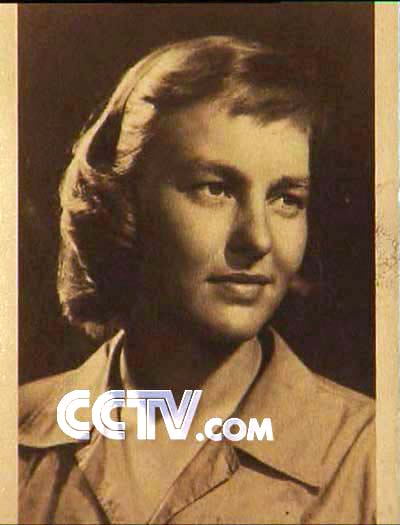 寒春
寒春