楼主: ReneeBK
2607 5

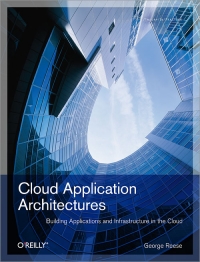
Cloud Application Architectures [推广有奖]

  • 1关注
  • 62粉丝

VIP

已卖:4897份资源

学术权威

14%

还不是VIP/贵宾

-

TA的文库  其他...

R资源总汇

Panel Data Analysis

Experimental Design

威望
1
论坛币
49635 个
通用积分
55.7537
学术水平
370 点
热心指数
273 点
信用等级
335 点
经验
57805 点
帖子
4005
精华
21
在线时间
582 小时
注册时间
2005-5-8
最后登录
2023-11-26

楼主
ReneeBK 发表于 2015-8-21 07:06:32 |AI写论文

+2 论坛币
k人 参与回答

经管之家送您一份

应届毕业生专属福利!

求职就业群
赵安豆老师微信:zhaoandou666

经管之家联合CDA

送您一个全额奖学金名额~ !

感谢您参与论坛问题回答

经管之家送您两个论坛币!

+2 论坛币

Book Description
If you're involved in planning IT infrastructure as a network or system architect, system administrator, or developer, this book will help you adapt your skills to work with these highly scalable, highly redundant infrastructure services. Cloud Application Architectures will help you determine whether and how to put your applications into these virtualized services, with critical guidance on issues of cost, availability, performance, scaling, privacy, and security.
Book Details
Publisher:        O'Reilly Media
By:        George Reese
ISBN:        978-0-596-15636-7
Year:        2009
Pages:        208
Language:        English
File size:        3.22 MB
File format:        PDF
eBook
Download:        Cloud Application Architectures

二维码

扫码加我 拉你入群

请注明:姓名-公司-职位

以便审核进群资格,未注明则拒绝

关键词:Architecture Application Architect cation cloud determine developer planning critical guidance

沙发
pzh_hzp 发表于 2015-8-21 07:16:11
  1. Transactional Computing
  2. Transactional computing makes up the bulk of business software and is the focus of this book. A transaction system is one in which one or more pieces of incoming data are processed together as a single transaction and establish relationships with other data already in the system. The core of a transactional system is generally a relational database that manages the relations among all of the data that make up the system.
复制代码

已有 1 人评分论坛币 收起 理由
Nicolle + 20 鼓励积极发帖讨论

总评分: 论坛币 + 20   查看全部评分

藤椅
auirzxp 学生认证  发表于 2015-8-21 07:38:36

The problem with memory locks

提示: 作者被禁止或删除 内容自动屏蔽

板凳
hoho936 发表于 2015-8-21 07:55:52
  1. Grid Computing
  2. Grid computing is the easiest application architecture to migrate into the cloud. A grid computing application is processor-intensive software that breaks up its processing into small chunks that can then be processed in isolation.
  3. If you have used SETI@home, you have participated in grid computing. SETI (the Search for Extra-Terrestrial Intelligence) has radio telescopes that are constantly listening to activity in space. They collect volumes of data that subsequently need to be processed to search for a nonnatural signal that might represent attempts at communication by another civilization. It would take so long for one computer to process all of that data that we might as well wait until we can travel to the stars. But many computers using only their spare CPU cycles can tackle the problem extraordinarily quickly.
  4. These computers running SETI@home—perhaps including your desktop—form the grid. When they have extra cycles, they query the SETI servers for data sets. They process the data sets and submit the results back to SETI. Your results are double-checked against processing by other participants, and interesting results are further checked.[3]
  5. Back in 1999, SETI elected to use the spare cycles of regular consumers’ desktop computers for its data processing. Commercial and government systems used to network a number of supercomputers together to perform the same calculations. More recently, server farms were created for grid computing tasks such as video rendering. Both supercomputers and server farms are very expensive, capital-intensive approaches to the problem of grid computing.
  6. The cloud makes it cheap and easy to build a grid computing application. When you have data that needs to be processed, you simply bring up a server to process that data. Afterward, that server can either shut down or pull another data set to process.
  7. Figure 1-1 illustrates the process flow of a grid computing application. First, a server or server cluster receives data that requires processing. It then submits that job to a message queue (1). Other servers—often called workers (or, in the case of SETI@home, other desktops)—watch the message queue (2) and wait for new data sets to appear. When a data set appears, the first computer to see it processes it and then sends the results back into the message queue (3). The two components can operate independently of each other, and one can even be running when no computer is running the other.
复制代码

报纸
Nicolle 学生认证  发表于 2015-8-21 08:14:11
提示: 作者被禁止或删除 内容自动屏蔽

地板
Nicolle 学生认证  发表于 2015-8-21 08:15:32

Amazon EC2

提示: 作者被禁止或删除 内容自动屏蔽

您需要登录后才可以回帖 登录 | 我要注册

本版微信群
加好友,备注jltj
拉您入交流群
GMT+8, 2026-1-5 04:05