


 发帖
发帖

 雷达卡
雷达卡



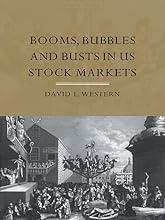
| In the US stock market things have changed a great deal since the heady days of the 1980s and we are now entering an era of profound uncertainty, with most analysts predicting trouble ahead. Indeed, the alarming decline of the NASDAQ shows no sign of abating and the fear is that traditional industries will be the next to bite the dust. September 11th has only added to the gloomy mood. A user-friendly overview of the inner workings of the US stock market, this book examines the current market conditions before looking back to the events of the past century - the Great Depression, the 1970s oil crisis, the party-for-the-rich atmosphere of the 1980s and the emergence of the new economy. | |||
Table of contents : Book Cover......Page 1 Half-Title......Page 2 Title......Page 3 Copyright......Page 4 Contents......Page 5 Figures......Page 12 Tables......Page 14 Foreword......Page 15 Acknowledgements......Page 18 From one bubble to another?......Page 20 A unique set of circumstances?......Page 21 How absurd were valuations?......Page 22 Why did Greenspan ignore ‘irrational exuberance?......Page 23 Greenspan and the markets......Page 25 The Fed’s enemy: inflation or deflation?......Page 26 What are the lessons from the 1929 bubble?......Page 27 Japan’s mess and deflation: what can the United States learn?......Page 28 The massive policy push: powerful enough to create sustainable growth?......Page 29 A bull or bear market rally?......Page 31 Introduction......Page 33 Origins of the bubble......Page 34 Stocks versus bonds......Page 36 Absurd valuations......Page 39 The bubble: geopolitical forces at work?......Page 41 The bubble: underwritten by a stable bond market?......Page 43 Debt, savings and switching......Page 44 Warning signals: why not switch?......Page 46 What of corporate earnings?......Page 47 Similarities with 1929......Page 49 Where from here?......Page 50 Conclusion......Page 51 Introduction......Page 53 Macroeconomic background......Page 54 The policy paradigm......Page 58 Dip and recovery: 1990–1......Page 60 The policy-induced correction: 1994–5......Page 62 Up, up and away: 1996–7......Page 66 Correction and a major recovery: 1998–2000......Page 71 A real bubble?......Page 72 Financial perspectives......Page 74 Conclusion......Page 75 Introduction......Page 76 Portfolio choice......Page 77 Diversification and risk......Page 79 News: economic or financial?......Page 81 Market efficiency......Page 82 Investing over the life cycle......Page 83 The fundamentals approach......Page 84 The contrarian strategy......Page 86 Serial correlation and mean reversion......Page 88 Investment strategies......Page 90 Expectations, trading and timing......Page 92 Conclusion......Page 94 Biases in the one-way street......Page 96 Where were the arbitragers?......Page 103 Old benchmarks and turning points......Page 104 Was it a speculative bubble?......Page 105 The ‘New’ new economy......Page 106 The 1990s: a deviation from fundamentals......Page 107 Wealth storage and far-sightedness......Page 109 Greenspan’s defense of the NASDAQ bubble......Page 110 Domestic origins of the boom......Page 112 Conclusion......Page 113 Introduction......Page 115 Productivity growth and the stock market......Page 116 A rational bubble?......Page 117 Old questions and old answers......Page 118 The productivity slow down debate......Page 119 Sources of productivity growth......Page 120 The IT and communications revolution......Page 122 IT and communications: drivers of productivity growth?......Page 125 US government and productivity growth......Page 126 Productivity growth: how permanent?......Page 127 Productivity and the stock bubble......Page 128 Conclusion......Page 129 Market versus government failure......Page 131 Incentives and trade-offs......Page 134 What are the challenging issues?......Page 136 Wall Street in the 1960s: fresh challenges......Page 137 Past pressure for regulation......Page 138 The case of Enron......Page 140 A dangerous incentive structure?......Page 141 Regulatory reform and the Sarbanes-Oxley Act......Page 142 Conclusion......Page 144 Introduction......Page 146 Ultimate objectives and trade-offs......Page 147 The government environment......Page 148 America’s economic cruise speed: what guideposts?......Page 149 Diagnosis of imbalances......Page 151 Hitting targets: what policy mix?......Page 155 What economic indicators?......Page 156 Critics of the ‘Wrong Paradigm’......Page 158 Canterbery’s Vatican paradigm......Page 159 Reputation and credibility of the Federal Reserve......Page 160 The caterpillar market and fear of the Fed......Page 161 Confessions of a central banker......Page 162 Conclusion......Page 163 Introduction......Page 165 Deregulation of the financial sector......Page 166 Financial product innovation......Page 167 Technology and innovation......Page 169 The effectiveness of monetary policy......Page 172 Target interest rates or monetary aggregates?......Page 174 Does money affect output?......Page 175 Channels of the monetary transmission mechanism......Page 176 Does money affect stock prices?......Page 178 Interest rates: how effective on output?......Page 179 Interest rates: what affect on stocks?......Page 181 Conclusion......Page 182 Introduction......Page 184 Greenspan’s economic philosophy......Page 185 Greenspan and the markets......Page 188 Power to move the economy?......Page 192 Mistakes in the Greenspan era?......Page 193 Greenspan’s two flagships......Page 196 Flexibility: Greenspan’s hallmark......Page 198 Conclusion......Page 200 Seeds of the bust in the 1920s......Page 201 Damage to the real economy......Page 203 Causes of the 1929 crash and depression......Page 204 The Keynesian view......Page 205 The Galbraith-Kindleberger view......Page 206 The monetarist view......Page 208 Financial sector disintermediation and balance sheets......Page 209 Goods price deflation......Page 210 Asset price deflation......Page 211 What lessons have we learnt?......Page 212 Could history repeat itself?......Page 213 Conclusion......Page 214 Japan’s old growth strategy......Page 215 Weaknesses and seeds of destruction......Page 217 Policy levers......Page 218 Why the asset price bubble?......Page 219 Financial not economic constraints......Page 221 Japan’s asset price bubble: liquidity roots?......Page 222 Monetary policy failure......Page 223 Monetary transmission mechanism: clogged pipes?......Page 224 Fiscal policy failure......Page 226 Krugman’s insight......Page 228 Japan’s policy response: why so ineffective?......Page 229 Lessons from Japan’s financial crisis......Page 230 Flow on effects from Krugman’s solution......Page 231 Lessons from Japan’s stagnation......Page 232 Conclusion......Page 233 Some commonalities......Page 234 Financial origins of the bubble......Page 235 The roller-coaster of speculation......Page 237 Crony capitalism and accelerated development......Page 238 Erosion of competitiveness......Page 239 Foreign forces......Page 240 Excess liquidity revisited......Page 241 Why did the bubble burst?......Page 242 The Asian crisis: why so sudden?......Page 244 Stock market performances: post bubble......Page 246 Conclusion......Page 250 Introduction......Page 251 From one bubble to another?......Page 252 What of currency instability?......Page 253 The liberation of Iraq......Page 254 Geopolitical forces......Page 255 Synchronization and integrated markets......Page 256 Why the US stock rally?......Page 258 The powerful policy stimulus......Page 259 The US economic recovery: where from here?......Page 262 Conclusion......Page 263 Bibliography......Page 267 Index......Page 273 |
本帖隐藏的内容
 Booms, bubbles, and busts in US stock markets 2004.pdf
(1.9 MB, 需要: 15 个论坛币)
Booms, bubbles, and busts in US stock markets 2004.pdf
(1.9 MB, 需要: 15 个论坛币)








 京公网安备 11010802022788号






