


 发帖
发帖
 雷达卡
雷达卡


According “Elliott Wave theory”. There are three basic types of corrections:
Zig-zags (Simple, double and triple zig-zags)
Flats (Regular flat, Expanding flat, Running flat )
Triangles
Double and Triple Threes
4.1 ZigZags (5-3-5)
Simple, Double and Triple zig-zags
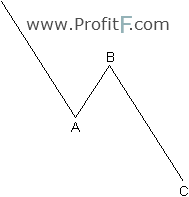
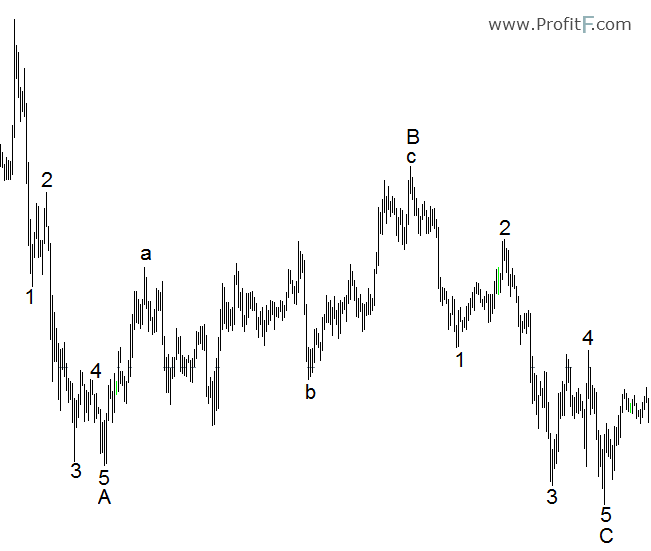
Simple zig-zag is the most common type of corrective pattern. It consists of three Elliott waves, labeled A-B-C. The wave structure is as follows: 5 waves for A, 3 waves for B, 5 waves for C.
Double zig-zag
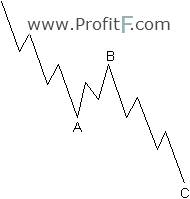
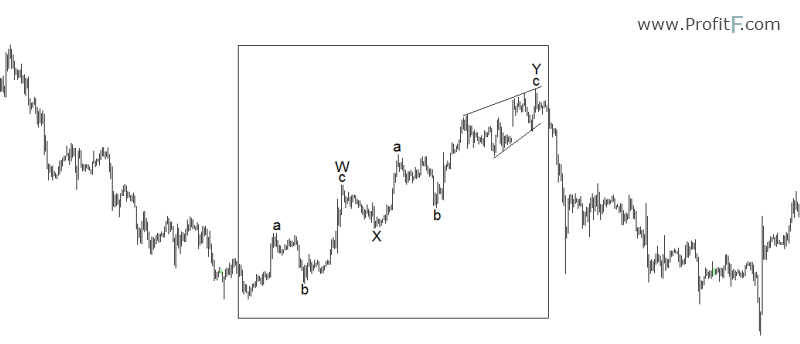
Sometimes a single zig-zag is not enough for the whole correction to be completed. In those cases the Market connects the first zig-zag with a second one through an X wave in between. The whole pattern is called “double zig-zag”, labeled W-X-Y, with a wave structure a-b-c for W, a-b-c for X, a-b-c for Y.
Triple zig-zag
And if the double zig-zag is not complecated enough to scare us out, it could evolve into a triple zig-zag, by adding another X wave, connecting Y with Z.
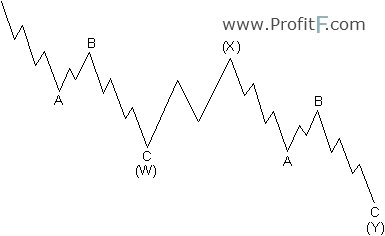
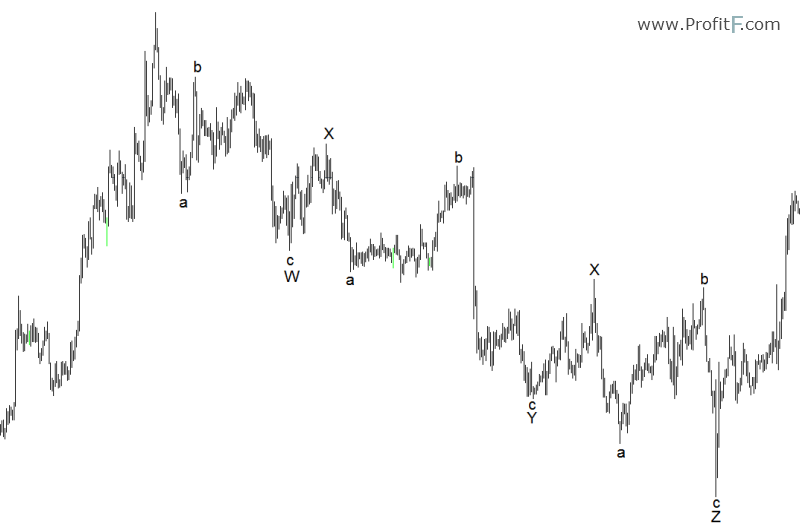
4.2 Flat Corrections (3-3-5)
“Flat” is a term used for three-wave sideways corrections. It consists of three-waves, labeled A-B-C. The wave structure is: three waves for A, three waves for B and an impulse for C. One very important rule about every flat correction is that its wave B must retrace at least 90% of wave A. There are three types of flat – regular, expanding and running. The only difference between them is in their shape, while the wave structure stays the same.
Regular flat
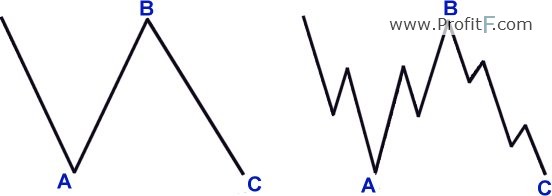
On the chart below you can see all characteristics of the regular flat. Pay attention to the depth of wave B compared to wave A. The 90% rule is fulfilled, but there is no new bottom. Wave C makes a new top, above the end of wave A.
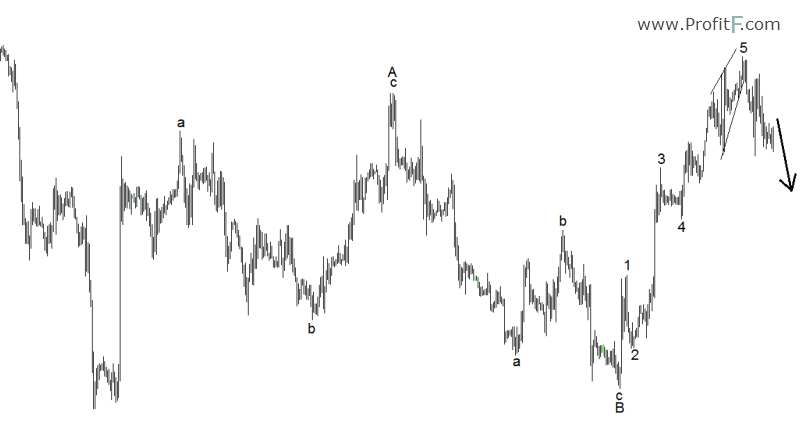
Expanding flat
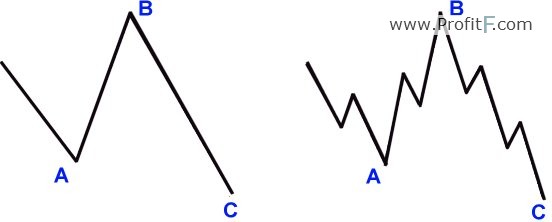
The only difference between the regular and the expanding flat is the fact, that its wave B exceeds the length of wave A. In other words, the forces behind the larger trend are so powerful, that wave B makes a new extreme – top or bottom, depending on the trend direction.
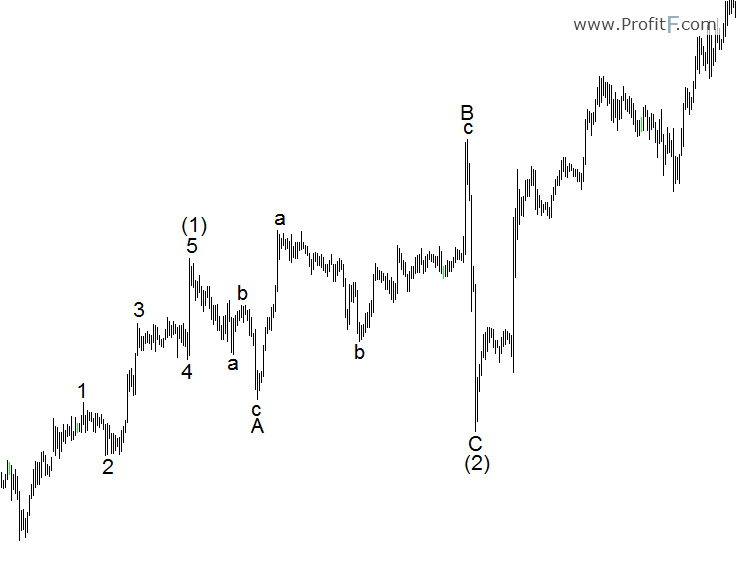
Below you can see how the classical expanding flat looks like in the wave (2) position. Wave B with a new top above the top of wave (1), which is also the start of wave A of the expanding flat. Wave C goes back below the end of wave A to bring the whole correction to an end.
Running flat
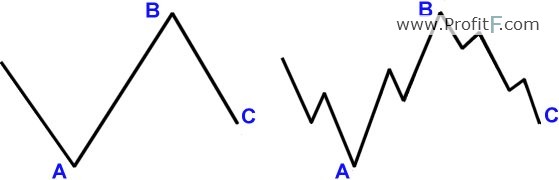
Here the trend, which is interrupted by the running flat is even more powerful. The new extreme in wave B is present during the running flat as well, but this time wave C could not reach the end of wave A..
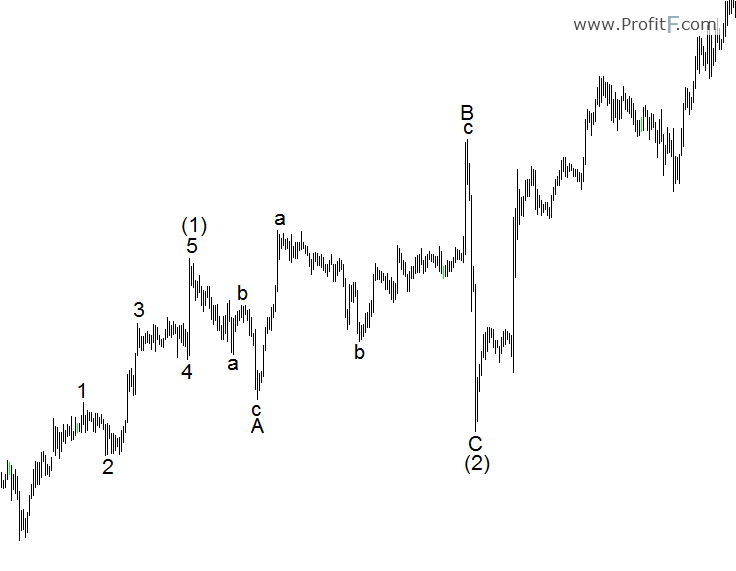
Below you can see uptrend, interrupted by a running flat in wave (B). You can see its wave structure. Wave A consists of a-b-c, wave B is made by an a-b-c to a new top, followed by wave C to the downside, which ends well above the bottom, left by wave A.
4.3 Triangles
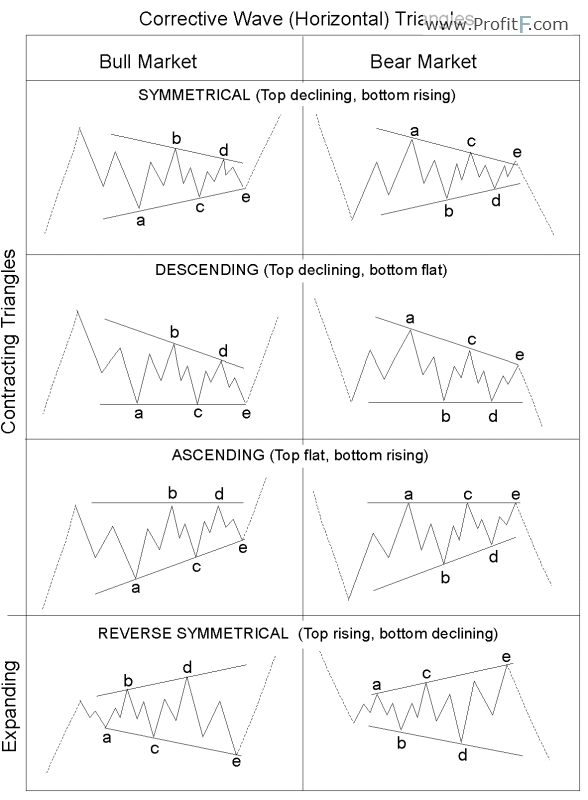
Triangles are sideways corrective patterns, which consist of five waves, labeled A-B-C-D-E. Each wave of the triangle has three sub-waves, so the wave structure of the triangles is 3-3-3-3-3. To highlight a triangle, you have to connect wave A with C and wave B with D. One very important characteristic of any triangle is that it preceeds the final movement of the trend of the larger degree. This means that a triangle could occur only in the position of wave 4 of an impulse, wave B of an A-B-C correction or as a final wave X in double or triple zig-zags. An example of the common contracting triangle is given below. Triangles are not always contracting. Sometimes they expand. So instead of getting narrower with each wave, the triangle is getting wider.
When we see a triangle developing, this means that we should expect one last movement of the current trend, after which a reversal should follow.
4.4 Double and Triple Threes
Double threes” and “Triple threes” (W-X-Y or W-X-Y-Z) combinations of corrective patterns. Combination of simpler types of corrections ( zig-zags and flats).
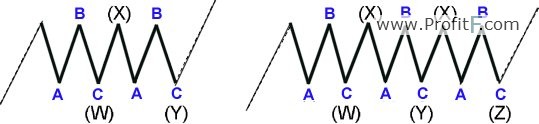
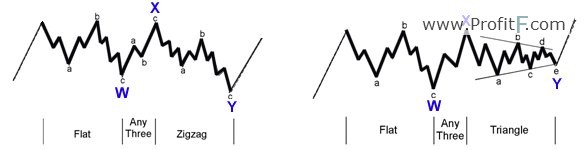
Usually a combination includes a flat and a zigzag (or an additional three of some kind in a triple three). But sometimes combinations also includes triangles. A triangle is a final component of these combinations.

 京公网安备 11010802022788号






