Are We On The Verge Of Witnessing The Death Of The Paper Gold Scam? Submitted by Tyler Durden on 05/09/2013 17:25 -0400 Central Banks China default Eric Sprott Fail Germany Hong Kong John Paulson KIM Physical Settlement Precious Metals Reality recovery Switzerland Too Big To Fail Turkey Volatility Submitted by Michael Snyder of The Economic Collapse blog , The legal claims on physical gold far exceed the amount of physical gold that the banks actually have by a very, very wide margin. And right now the bankers are scared out of their wits because their warehouses are being drained of physical gold at a frightening rate. So what happens when their physical gold is gone but they still have lots and lots of people with legal claims to gold? When that moment arrives, it will represent the end of the paper gold scam. Many believe that the recent takedown of the price of paper gold was a desperate attempt by the bankers to put off that day of reckoning, but it appears to have greatly backfired on them. Instead of cooling off demand for precious metals, it has unleashed a massive " gold rush " all over the globe . Meanwhile, word has been spreading among wealthy families in both North America and Europe that they had better grab their physical gold out of the banks while they still can. This is creating havoc in the financial community , and at least one major international bank has already declared that it will only be settling those accounts in cash from now on. The paper gold scam is starting to unravel, and by the time this is all over it is going to be a complete and total nightmare for global financial markets. For years it has been widely known that the promises that banks have made regarding their gold far exceed their actual ability to deliver , but we have never reached a moment of such crisis before. Posted below are quotes from people that know precious metals far better than I do. What these experts are saying is more than a little bit disturbing... - CME President Terry Duffy : What’s interesting about gold, when we had that big break two weeks ago we saw all the gold stocks trade down significantly, we saw all the gold products trade down significantly, but one thing that did not trade down, was gold coins, tangible real gold. That’s going to show you, people don’t want certificates, they don’t want anything else. They want the real product. - Billionaire Eric Sprott : So we see all of these paper (trading) volumes going through that bear absolutely no relationship to what’s going on in the physical markets. As you know I have always been a proponent of the fact that supply in the gold market was way less than demand, and by a very large factor. I think demand exceeds supply by at least 60%. The central banks are surreptitiously supplying that gold, and ultimately they will be running on fumes. When we hear about the LBMA not willing to deliver gold, and JP Morgan’s inventories at the COMEX have gone from 2.4 million (ounces) down to 160,000 ounces, it just makes you realize that all of this paper trading means nothing. It’s the real physical market that you have to rely on. - JS Kim : FACT #1 : COMEX gold vaults were recently drained of 2 million ounces of physical gold in one quarter, the largest withdrawal of physical gold bullion from COMEX vaults in one quarter during this entire 12-year gold and silver bull. There has been speculation about the reasons that spurred these massive withdrawals of gold from COMEX vaults, but the most reasonable speculation is that no one trusts the bankers to hold on to their physical gold anymore, especially in light of Fact #2 . Note below, that both registered AND eligible stocks of gold had heavily declined in recent months. Such an event signals a general distrust of the banking system from everyone holding gold in registered COMEX vaults. FACT #2 : One of the largest European banks, ABN Amro, defaulted on their gold contracts and informed their clients that they would only settle their gold bullion contracts in cash and not in physical. So much for the supposed legality of financial contracts as a "binding" contract. So whether Fact #1 caused Fact #2 or vice versa is irrelevant. What IS apparent is that the level of trust in bankers to safekeep physical gold and physical silver is disappearing, as it should be, and as it should have already been for years now. But truth always takes some time to catch up to banker spread lies and that is what is happening now. I have been warning people never to trust bankers in deals involving gold and silver for years now, as in this article I wrote nearly four years ago informing the public that the SLV and GLD are likely a banker invented scam as well. FACT #3 : Silver fraud whistleblower and London trader Andrew Maguire stated that the LBMA was having trouble settling gold contracts in bullion as well and stated that institutions that asked for physical settlement “were told they would be cash settled instead by a bullion bank.” In plain English, this is a default. So Andrew Maguire reported that the LBMA had already gone into default. In light of Fact #1 and Fact #2 , the dominoes were starting to tumble and the house of cards that the bankers had built in gold and silver paper derivatives to deceive and hide the true fundamentals of the physical gold and physical markets from the entire world was rapidly starting to crumble. A financial earthquake of magnitude 2.5 was quickly threatening to evolve into one of the biggest financial earthquakes of all time in which the world’s confidence in all global fiat currencies would effectively have a well-deserved funeral. - Jim Sinclair : I think the reality is the supply situation is extremely volatile at this point, and even discussing it is like rubbing a raw nerve to the people who are in charge. The amount of discussion on the subject of warehouse supply, supply that is represented by the gold leases, indicated to the central planners that the demand for physical was going to continue to effect the exchanges. Although they did not expect any grandstand delivery, the mere continued draining of physical inventories was threatening the very functioning of the paper exchange. That threatening of the paper exchange and its ability to continue functioning is really taking off the blinders and revealing the truth behind the critical question, ‘Where is the gold?’ The question now is, ‘Where has the gold gone?’ Who has all of this gold? Because of the nature of gold leasing, all of this gold has been purchased and it has gone somewhere. The reality of the empty vaults reveal that the gold has gone missing. - Ronald Stoeferle : We’re seeing this rush to physical gold not only in the retail market, but also for the institutional players... just overwhelming…I a 130-to-1 …and I think in the last week we were really close to a default of the paper market. - Gerhard Schubert, head of Precious Metals at Emirates NBD : I have not seen in my 35 years in precious metals such a determined and strong global physical demand for gold. The UAE physical markets have been cleared out by buyers from all walks of life. The premiums, which have been asked for and which have been paid have been the cornerstone of the gold price recovery. It is very rare that physical markets can have a serious impact on market prices, which are normally driven solely by derivatives and futures contracts… I did speak during the week with several refineries in the world, of course including the UAE refineries, and the waiting period for 995 kilo bars is easily 2-3 weeks and goes into June in some cases. A large portion of the 995 kilo bars in the UAE goes normally into the Indian market, but a lot of the available 995 kilo bars are destined for Turkey, at this time. We heard that premiums paid in Turkey have reached anything between US $ 20 and US $ 35 per ounce. - James Turk : Another indication of the demand for large bars is the huge drawdown in the gold stock in COMEX warehouses. It is noteworthy that COMEX reports show the drawdown is largely the result of dealers removing their inventory, their working stock. When that happens, you know the availability of supply is constrained. What all of this means, Eric, is one thing. If the central planners want to keep the precious metals at these low prices, to meet the demand for physical metal they will need to empty more metal from central bank vaults, or borrow metal from the ETFs as some have suggested is happening. Otherwise, the central planners will have to step back and stop their intervention, thereby letting the price of gold and silver rise so that demand tapers off, bringing demand and supply of physical metal back toward some kind of balance. We've seen this same situation several times over the last twelve years. It is what I have been calling a “managed retreat.” Despite the current weakness, I firmly believe we have again entered a critical period where the central planners will need to retreat once again in order to let the gold and silver prices climb higher. - The Golden Truth : And then I get a call from a close friend in NYC last Friday. His career has been in private wealth management in the private bank department of the Too Big To Fail banks. He's been looking for work and chats with old colleagues all the time. He called my Friday and told me he just got off the phone with a very high level private banker from a big Euro-based TBTF bullion bank, but who was at JP Morgan until about six months ago. This guy told my friend that there is a scramble by many very wealthy European families/entities to get their 400 oz bars out of the big bank vaults. He knows this personally, for a fact. He said the private banker community is small over there and the big wealthy families all talk to each other and act on the same rumors/sentiment. The Bundesbank/Fed and the ABN/Amro situations triggered this move. He knows for a fact JPM tried to calm fears about 3 months ago by sending a letter to it's very wealthy clients assuring them their bars were safe, in allocated accounts. He said right now those same families are walking into the big banks like JPM and demanding delivery of their bars or threatening to take their $100's of millions in investment portfolios to competitors. His wording was "these people are putting a gun to the heads of private banks and demanding their gold." I know this information is good because I know my friend's background and when he tells me his source is plugged in, the guy is plugged in. Not only that, my friend's source said that there's no doubt that someone like a John Paulson, not necessarily specifically him, but entities like him or it may include him, have held a gun to GLD and demanded delivery of physical in exchange for their shares. Regarding the Bundesbank/Fed situation, recall that the Bundesbank asked to have some portion of its gold sitting - supposedly - in the NY Fed vault in NYC sent back Germany. The total amount is 1800 tonnes. After behind the scenes negotiations, the Fed agreed to ship 300 tonnes back over seven years. To this day, the time required for that shipment has never been explained. Venezuela demanded the return of its 200 tonnes held in London, NYC and Switzerland and received it all within about four months. And regarding the ABN/Amro situation. ABN/Amro offered a gold investment account product that offered physical delivery of the gold in the investment account when the investor cashes out. About a week before the gold price smash, ABN sent a letter to its clients informing that the physical delivery of the bullion was no longer available and that all accounts would be settled with cash at redemption. I believe it was these two events that triggered the big scramble for physical gold by wealthy families/entities who were suspicious of the integrity of their bank vault custodial arrangement anyway. ***** So what does all of this mean? It means that we are entering a period when there will be unprecedented volatility for precious metals. There will be tremendous ups and downs as this crisis plays out and the bankers try to keep the paper gold scam from completely unraveling. Meanwhile, nations such as China continue to stockpile gold as if the end of the world was coming. According to Zero Hedge , Chinese gold imports set a brand new all-time record high in March... Quite the contrary: as export data released by the Hong Kong Census and Statistics Department overnight showed, Chinese gold imports in March exploded to an all time record high of 223.5 tons. And the number for April is expected to be even higher. Does China know something that the rest of us do not? We are also seeing a rapid decoupling between spot prices and physical prices. In fact, it is quickly getting to the point where the spot price of gold and the spot price of silver are becoming irrelevant. For example, demand for silver coins has become so intense that some dealers are charging premiums of up to 30 percent over spot price for silver eagles. That would have been regarded as insane a few years ago, but people are now willing to pay these kinds of premiums. People are recognizing the importance of actually having physical gold and silver in their possession and they are willing to pay a significant premium in order to get it. We are moving into uncharted territory. The paper gold scam is rapidly coming to an end. In the long-term, this will greatly benefit those that are holding significant amounts of physical gold and silver. Average: 4.77049 Your rating: None Average: 4.8 ( 61 votes) Tweet - advertisements - Change is about to catch Republicans by surprise. A financial journalist says a scandal brewing in DC will catch most Republicans by surprise, and will alter the political system. Login or register to post comments 36266 reads Printer-friendly version Send to friend Similar Articles You Might Enjoy: 2012 Year In Review - Free Markets, Rule of Law, And Other Urban Legends Eric Sprott: "When Fundamentals No Longer Apply, Review the Fundamentals" Eric Sprott: The Real Banking Crisis, Part II Eric Sprott On The Real Banking Crisis: Global Depositor Bank Runs And Why Gold Is Going Much Higher As A Result The $700 Billion U.S. Funding Hole; Desperately Seeking A Very Indiscriminate Treasury Buyer
Chinese Gold Imports Soar To Monthly Record On Insatiable Demand Submitted by Tyler Durden on 05/08/2013 09:29 -0400 China Exchange Traded Fund Hong Kong Reuters In what must be an inexplicable move to momentum-chasers everywhere, as gold continued to decline in price in March, and long before its targeted smash in April, China was not backing off its gold purchases of the yellow product. Quite the contrary: as export data released by the Hong Kong Census and Statistics Department overnight showed, Chinese gold imports in March exploded to an all time record high of 223.5 tons. This follows 97.1 tons in February, and brings the total imports for the first quarter of 2013, or 372 tons, on par with what China imported in the entire first half. It also means that since January 2012, China has imported an absolutely stunning 1,206 tons of gold. Putting this number in context, this is 20% more than the entire reporter official gold holdings of 1054 tons, and represents roughly half of the total 2500 tons of gold mined every year (a number which is set to decline as gold miners find current prices unsustainable and are forced to shut down production). Comparison of Chinese gold imports: 2012 vs 2013: And sequential change in Chinese gold imports since January 2012 or when the gold fever in China was truly unleashed: The latest official Chinese holdings: And if March was a record month for China, we can't wait for April when prices plunged and when physical buyers, who unlike paper momentum chasers buy more then lower the price falls will see the recent take down as a buying opportunity (if they can find physical of course). From Reuters: Chinese gold imports are likely to swell further after more than doubling to an all time high in March as retail consumers pounced when prices plunged to a two-year low last month. "Physical demand picked up significantly over the last couple of weeks. Consumers and industrial users tend to see price drops as buying opportunities," Zhang Bingnan, secretary-general of the China Gold Association, told Reuters. "Investment demand should continue to stay strong through the rest of the year because of limited investment alternatives ," said Zhang, adding that gold sales and processing volumes both spiked in April. "April imports will be stronger than March," said Ronald Leung, chief dealer at Lee Cheong Gold Dealers in Hong Kong. " The world was buying gold and China was no different at all ." And therein lies the rub: because if China fails to mask the ongoing soaring hot money inflows as reported earlier, and which amounted to over $180 billion in q1 as reported earlier , just watch as Chinese demand for physical goes truly off the charts. The rest of the story is well known but here it is from Reuters: In March, Shanghai gold futures fetched premiums of more than $30 to global prices, making it cheaper to buy the metal overseas. April could see imports swell further after the drop in international prices spurred frenzied buying in Asia, leading to a shortage of gold bars and coins in Singapore as well as Hong Kong, which is China's main source for gold imports. The drop in prices has prompted a gold rush in China, with Chinese shoppers flocking to retailers to buy jewellery and bars. A spokesman for Hong Kong jewellery chain Chow Tai Fook, the world's largest jewellery retailer by market value, told Reuters that traffic at its China stores jumped by 50 percent during the May Day holidays. The surge in Chinese travellers during the three-day May Day holiday also drove gold sales in Hong Kong to rise by an estimated 50 percent, with total gold sales from April 29-May 2 reaching some 40 tonnes, local media quoted Haywood Cheung, president of the Hong Kong Gold and Silver Exchange, as saying. The jump in Chinese physical demand also prompted some banks to ship in more supplies from London and Swiss vaults, traders said. What about New York vaults? And specifically the biggest gold vault in the world, located 90 feet below 1 Chase Manhattan Plaza? Or is there maybe a correlation between the record drawdown in JPM's commercial holdings and the record break out of Chinese gold fever? We hope to find out soon. As for the increasingly irrelevant spot price of gold paper derivatives, we can only hope "experts" like Paulson et al can continue their liquidation of gold ETF "holdings" for as long as possible: after all one can buy far more gold more when the price is lower, not higher. Average: 4.533335 Your rating: None Average: 4.5 ( 15 votes) Tweet - advertisements - Login or register to post comments 14548 reads Printer-friendly version Send to friend Similar Articles You Might Enjoy: LBMA Chairman Says Chinese Gold Allocation To Rise UK And US Data Shows Stagflation Threat Deepening - Asian Gold Demand Remains Very High Gold And Silver Reach New Record Nominal Highs – Little Coverage, Bearish And Superficial Analysis Overnight Recap: Japan's Nuclear Crisis Leads To 'Panic' - Nikkei Crashes 17% In 2 Days, Japanese Default Risk Rises to Record, Gold Down 1% in $ World Gold Council Releases Q4 And 2009 Gold Demand Trends Report
Chinese Gold Imports Soar To Monthly Record On Insatiable Demand Submitted by Tyler Durden on 05/08/2013 09:29 -0400 China Exchange Traded Fund Hong Kong Reuters In what must be an inexplicable move to momentum-chasers everywhere, as gold continued to decline in price in March, and long before its targeted smash in April, China was not backing off its gold purchases of the yellow product. Quite the contrary: as export data released by the Hong Kong Census and Statistics Department overnight showed, Chinese gold imports in March exploded to an all time record high of 223.5 tons. This follows 97.1 tons in February, and brings the total imports for the first quarter of 2013, or 372 tons, on par with what China imported in the entire first half. It also means that since January 2012, China has imported an absolutely stunning 1,206 tons of gold. Putting this number in context, this is 20% more than the entire reporter official gold holdings of 1054 tons, and represents roughly half of the total 2500 tons of gold mined every year (a number which is set to decline as gold miners find current prices unsustainable and are forced to shut down production). Comparison of Chinese gold imports: 2012 vs 2013: And sequential change in Chinese gold imports since January 2012 or when the gold fever in China was truly unleashed: The latest official Chinese holdings: And if March was a record month for China, we can't wait for April when prices plunged and when physical buyers, who unlike paper momentum chasers buy more then lower the price falls will see the recent take down as a buying opportunity (if they can find physical of course). From Reuters: Chinese gold imports are likely to swell further after more than doubling to an all time high in March as retail consumers pounced when prices plunged to a two-year low last month. "Physical demand picked up significantly over the last couple of weeks. Consumers and industrial users tend to see price drops as buying opportunities," Zhang Bingnan, secretary-general of the China Gold Association, told Reuters. "Investment demand should continue to stay strong through the rest of the year because of limited investment alternatives ," said Zhang, adding that gold sales and processing volumes both spiked in April. "April imports will be stronger than March," said Ronald Leung, chief dealer at Lee Cheong Gold Dealers in Hong Kong. " The world was buying gold and China was no different at all ." And therein lies the rub: because if China fails to mask the ongoing soaring hot money inflows as reported earlier, and which amounted to over $180 billion in q1 as reported earlier , just watch as Chinese demand for physical goes truly off the charts. The rest of the story is well known but here it is from Reuters: In March, Shanghai gold futures fetched premiums of more than $30 to global prices, making it cheaper to buy the metal overseas. April could see imports swell further after the drop in international prices spurred frenzied buying in Asia, leading to a shortage of gold bars and coins in Singapore as well as Hong Kong, which is China's main source for gold imports. The drop in prices has prompted a gold rush in China, with Chinese shoppers flocking to retailers to buy jewellery and bars. A spokesman for Hong Kong jewellery chain Chow Tai Fook, the world's largest jewellery retailer by market value, told Reuters that traffic at its China stores jumped by 50 percent during the May Day holidays. The surge in Chinese travellers during the three-day May Day holiday also drove gold sales in Hong Kong to rise by an estimated 50 percent, with total gold sales from April 29-May 2 reaching some 40 tonnes, local media quoted Haywood Cheung, president of the Hong Kong Gold and Silver Exchange, as saying. The jump in Chinese physical demand also prompted some banks to ship in more supplies from London and Swiss vaults, traders said. What about New York vaults? And specifically the biggest gold vault in the world, located 90 feet below 1 Chase Manhattan Plaza? Or is there maybe a correlation between the record drawdown in JPM's commercial holdings and the record break out of Chinese gold fever? We hope to find out soon. As for the increasingly irrelevant spot price of gold paper derivatives, we can only hope "experts" like Paulson et al can continue their liquidation of gold ETF "holdings" for as long as possible: after all one can buy far more gold more when the price is lower, not higher. Average: 4.533335 Your rating: None Average: 4.5 ( 15 votes) Tweet - advertisements - The End of Obama? Could Obama's presidency be ruined by a single upcoming event? A widely read journalist in America thinks so. Login or register to post comments 14368 reads Printer-friendly version Send to friend Similar Articles You Might Enjoy: LBMA Chairman Says Chinese Gold Allocation To Rise UK And US Data Shows Stagflation Threat Deepening - Asian Gold Demand Remains Very High Gold And Silver Reach New Record Nominal Highs – Little Coverage, Bearish And Superficial Analysis Overnight Recap: Japan's Nuclear Crisis Leads To 'Panic' - Nikkei Crashes 17% In 2 Days, Japanese Default Risk Rises to Record, Gold Down 1% in $ World Gold Council Releases Q4 And 2009 Gold Demand Trends Report
Fun With Fibonacci Flashbacks Submitted by Tyler Durden on 05/08/2013 20:15 -0400 Digital Dickweed Fibonacci Reality When a 'blog' puts the words Fibonacci, Gold, and Stocks in the same post, it well and truly earns its 'tin-foil-hat'-wearing "digital dickweed" honors. And so, we present, for the edification of all those who believe in gold as the only sound numeraire for judging value; for those who believe it's never different this time; and for those who believe in dead-cat-bounces; the Dow in Gold in the 30s, 70s, and Now... The crash in nominal 'price' is followed by a Fib 23.6% retracement rally as hope triumphs over adversity... only for reality to rapidly re-emerge... Charts: Bloomberg
Physical Gold vs. Paper Gold: The Ultimate Disconnect Submitted by Tyler Durden on 04/23/2013 21:29 -0400 Central Banks China Commitment of Traders ETC Exchange Traded Fund Futures market George Soros Goldman Sachs goldman sachs Gross Domestic Product Guest Post LIBOR MF Global Peter Schiff Precious Metals Purchasing Power Sovereign Debt Submitted by Bud Conrad of Casey Research , How can we explain gold dropping into the $1,300 level in less than a week? Here are some of the factors: George Soros cut his fund holdings in the biggest gold ETF by 55% in the fourth quarter of 2012. He was not alone: the gold holdings of GLD have contracted all year, down about 12.2% at present. On April 9, the FOMC minutes were leaked a day early and revealed that some members were discussing slowing the Fed $85 billion per month buying of Treasuries and MBS. If the money stimulus might not last as long as thought before, the "printing" may not cause as much dollar debasement. On April 10, Goldman Sachs warned that gold could go lower and lowered its target price. It even recommended getting out of gold. COT Reports showed a decrease in the bullishness of large speculators this year (much more on this technical point below). The lackluster price movement since September 2011 fatigued some speculators and trend followers. Cyprus was rumored to need to sell some 400 million euros' worth of its gold to cover its bank bailouts. While small at only about 350,000 ounces, there was a fear that other weak European countries with too much debt and sizable gold holdings could be forced into the same action. Cyprus officials have denied the sale, so the question is still in debate, even though the market has already moved. Doug Casey believes that if weak European countries were forced to sell, the gold would mostly be absorbed by China and other sovereign Asian buyers, rather than flood the physical markets. My opinion, looking at the list of items above, is that they are not big enough by themselves to have created such a large disruption in the gold market. The Paper Gold Market The paper gold market is best embodied in the futures exchanges. The prices we see quoted all day long moving up and down are taken from the latest trades of futures contracts. The CME (the old Chicago Mercantile Exchange) has a large flow of orders and provides the public with an indication of the price of gold. The futures markets are special because very little physical commodity is exchanged; most of the trading is between buyers taking long positions against sellers taking short positions, with most contracts liquidated before final settlement and delivery. These contracts require very small amounts of margin – as little as 5% of the value of the commodity – to gain potentially large swings in the outcome of profit or loss. Thus, futures markets appear to be a speculator's paradise. But the statistics show just the opposite: 90% of traders lose their shirts. The other 10% take all the profits from the losers. More on this below. On April 13, there were big sell orders of 400 tonnes that moved the futures market lower. Once the futures market makes a big move like that, stops can be triggered, causing it to move even more on its own. It can become a panic, where markets react more to fear than fundamentals. Having traded in futures for over two decades, I want to provide some detail on how these leveraged markets operate. It's important to understand that the structure of the futures market allows brokers to sell positions if fluctuations cause customers to exceed their margin limits and they don't immediately deposit more money to restore their margins. When a position goes against a trader, brokers can demand that funds be deposited within 24 hours (or even sooner at the broker's discretion). If the funds don't appear, the broker can sell the position and liquidate the speculator's account. This structure can force prices to fall more than would be indicated by supply and demand fundamentals. When I first signed up to trade futures, I was appalled at the powers the broker wrote into the contract, which included them having the power to immediately liquidate my positions at their discretion. I was also surprised at how little screening they did to ensure that I was good for whatever positions I put in place, considering the high levels of leverage they allowed me. Let me tell you that I had many cases where I was told to put up more margin or lose my positions. Those times resulted in me selling at the worst level because the market had gone against me. The point of this is that once a market moves dramatically, there are usually stops taken out, positions liquidated, margin calls issued, and little guys like me get taken to the cleaners. Debates rage about the structure of the futures market, but my personal opinion is that a big hammer to the market by a well-heeled big player can force liquidations, increase losses, and push the momentum of the market much lower than the initial impetus would have. Thus, after a huge impact like we saw on April 13, the market will continue with enough momentum that a well-timed exit of a huge set of short positions can provide profits to the well-heeled market mover. Moving from theory to practice, one of the most important things to keep your eye on is the Commitment of Traders (COT) report, which is issued every Friday. It details the long and the short positions of three categories of traders. The first category is called "commercials." They are dealers in the physical precious metals – for example, gold miners. The second category is called "non-commercials." They include hedge funds and large commercial banks like JP Morgan. Non-commercials are sometimes called "large speculators." The rest are the small traders, called "non-reporting" since they are not required to identify themselves. The ones to watch are the large speculators (non-commercials), as they tend to move with the direction of the market. Individual entities could be long or short, but in combination the net position of the group is a key indicator. The following chart shows the price of gold as a blue line at the top, and the next panel down shows the net position of these large speculators as a black line. You can see that over the long term, they move together. When the net speculative position is above zero, this group is betting on rising gold prices. Of course, the reverse is true when it's below zero. In this 20-year view, the large speculators were holding net negative positions during the lowest point of the gold price, around the year 2000. As the price of gold rose, their positions went net long, and they profited. An interesting thing about the chart above is that the increasing amount of net longs reversed itself before gold peaked in 2011, suggesting that these large speculators became slightly less bullish all the way back in 2010. The balance remains net long, but it remains to be seen how long that lasts. What is not so obvious is that these large speculators are so big that they can affect the market as well as profit from it; when they initiate massive positions in a bull market, they drive the price of the futures contracts even higher. Similarly, when they remove their positions or actually go short, they can push the market lower. So what happened a week ago was that a massive order to sell 400 tons of gold all at once hit the market. Within minutes the price plummeted, and over a two-day period resulted in the largest drop of the price for futures delivery of gold in 33 years: down $200 per ounce. We don't have the name of the entity that did this. However, the way the gold was sold all at once suggests that the goal was not to get the best price. An investor with a position of this size should have been smart enough to use sensible trading tactics, issuing much smaller sell orders over a period of time. This would avoid swamping the market; and some of the orders would be filled at higher prices and thus generate more profit. Placing a sell order big enough to affect the overall market price suggests that someone with powerful backing wanted to drive the price of gold down. Such an entity could have been a large speculator who already had a sizable short position and could gain by unloading some of its short position once the market momentum had driven the price even yet lower. Or it could be a central bank – one that might be happy to have the gold price move lower, as it would provide cover for its printing of more new money. Of course, it could be some entity that owned long contracts and wanted to get out of the position all at once. We don't know, but this kind of activity, resulting in the biggest drop in 30 years, raises more than just suspicion when we consider how important the price of gold is to many markets around the globe. Can markets really be influenced by big players? Well, was the LIBOR rate accurately reported by huge banks? Have players ever tried to corner markets? The answer to all the above, unfortunately, is yes. There's an even bigger problem with the legal structure of the futures market: even the segregated funds on deposit can be pilfered by the broker for the brokerage's other obligations. That is what happened to MF Global customers under Mr. Corzine. (I had an account with a predecessor company called Man Financial – the "MF" in the name. I also had an account with Refco, which is now defunct. Fortunately, the daggers did not hit my account, since I was not a holder when the catastrophes occurred.) My take: the futures market is dangerous, and not a place for beginners. One last note: after the Bankruptcy Act of 2005, the regulations support the brokers, not the investors, when there are questions of legality about losses in individual investment accounts. Casey Research will be producing a report with much more detail on this subject in the near future. So, what now? We aren't going to see a secret memo – no smoking gun to confirm that what happened on April 13 was an attempt to affect the market. Still, the evidence is suspicious. When big entities can gain from putting on big positions, the incentives are big enough for them to try – LIBOR, Plunge Protection Team, Whale Trade, etc. , all support this view. The Physical Gold Market Previously, there was little difference between the physical and paper markets for gold. Yes, there were premiums and delivery charges, but everybody regarded the futures market as the base quote. I believe this is changing; people don't trust the paper market as they used to. Instead of capitulating to fear of greater losses, the demand for physical gold has hit new records. The US Mint sold a record 63,500 ounces – a whopping 2 tonnes – of gold on April 17 alone, bringing the total sales for the month to 147,000 ounces; that's more than the previous two months combined. Indian markets, which are more oriented to physical metal, now have a premium of US$150 over the futures price in Chicago. Demand at coin dealers has increased as the price has dropped. And premiums are much bigger than they were as recently as a week ago. Here is a vendor page that quotes purchase prices and calculates the premiums on an ongoing basis. It shows premiums of 50% and more in many cases. On eBay, prices for one-ounce silver coins are $33 to $35, where the futures price is quoted as $23. A look on Friday April 19 shows one vendor out of stock on most items: Buy - Sell On SilverBullion 2013 Sealed Mint Boxes Of 1 Oz. Silver American Eagles - Brand New Coins 500 Coin Min. (1 Sealed Box) Buy @ Spot + $1.80 Sold Out 2013 Sealed Mint Boxes Of 1 Oz. Silver American Eagles "San Francisco Mint" Brand New Coins 500 Coin Min. (1 Sealed Box) Buy @ Spot + $2.00 Sold Out 90% Silver Coin Bags (Our Choice Dimes Or Quarters) $1,000 Face Value Figured at 715 Ozs Per $1,000 Face $1,000 Face Value Min. We Buy @ Spot + $1.70 Per Oz (Spot + $1.70 X 715) Spot + $4.99 Per Oz (Spot + $4.99 X 715) 90% Silver Coin Bags 50 Half Dollars $1,000 Face Value We Ship in 2 $500 Face Bags $1,000 Face Value Min. We Buy @ Spot + $1.90 Per Oz (Spot + $1.90 X 715) Sold Out 90% Silver Coin Bags Walking Liberty Half Dollars $1,000 Face Value We Ship in 2 $500 Face Bags $1,000 Face Value Min. We Buy @ Spot + $2.10 Per Oz (Spot + $2.10 X 715) Sold Out Amark 1 Oz. Silver Rounds ( Made By Sunshine ) Pure .999 BU 500 Coin Min. Buy @ Spot -15c Sold Out Clearly, the physical gold market today is sending different signals than the paper market. The Case for Gold Is Still with Us The long-term fundamental reasons to hold gold are undeniably still with us. The central banks of the world are acting in concert in "currency wars" or "the race to debase." As they print more money, the purchasing power of each unit declines. They are caught between the rock of having to keep interest rates low to support their governments' huge deficits and the hard place of the long-term effect of diluting their currency. If rates rise, even First World governments will be forced to pay higher interest fees, leading to loss of confidence in their ability to pay back their debt, which will bring on a sovereign debt crisis like what we have seen in the PIIGS or Argentina recently. The following chart shows the rapid growth in the balance sheets as a ratio to GDP for the three largest central banks. I've extrapolated the expected growth into the future based on the rate at which they propose to buy up assets. One could argue about how long these growth rates will continue, but the incentives are all there for all central banks to bail out their governments and their commercial banks. I fully expect the printing game to continue to provide the fuel for hard-asset investments like gold and silver to increase in price in the years to come. Buying Opportunity or Time to Flee? So what does it all mean? The paper price of gold crashed to $1,325 in the wake of this huge trade. It is now hovering around $1,400. My first reaction is to suggest that this is only an aberration, and that the fundamentals of the depreciating value of paper currencies will eventually take the price of gold much higher, making it a buying opportunity. But what I can't predict is whether big players might again deliver short-term downturns to the market. The momentum in the futures market can make swings surprisingly larger than the fundamentals of currency valuation would suggest. Traders will be looking for a significant turnaround to the upside in price before entering long positions. However, a long-term, fundamentals-based trader has to look at the low price as a buying opportunity. I can't prove it, but I think the fundamentals will drive the long-term market more than these short-term events. The fight between pricing from the physical market for bullion and that from the "paper market" of futures is showing signs of discrimination and disagreement, as the physical market is booming, while prices set by futures are seemingly pressured to go nowhere. In short, I think this is a strong buying opportunity. What would you do if the government outlawed gold ownership? If you had taken the steps outlined in Internationalizing Your Assets, you'd have little to worry about, as much of your gold – indeed, most of your assets – would be protected. Internationalizing Your Assets is a must-see web video for anyone concerned about losing wealth to increasingly desperate politicians. The event premiers at 2 p.m. EDT on April 30 and features some of the world's foremost experts on international asset protection, including Casey Research Chairman Doug Casey and Euro Pacific Capital CEO Peter Schiff. Attending Internationalizing Your Assets is free. To register or for more information, please visit this web page .
JPMorgan's Eligible Gold Plummets 65% In 24 Hours To All Time Low Submitted by Tyler Durden on 04/25/2013 17:30 -0400 We are confident that in the aftermath of our article from last night " Just What Is Going On With The Gold In JPMorgan's Vault ?" in which we showed the absolute devastation of "eligible" (aka commercial) gold warehoused in JPM's vault just over the Manhattan bedrock at 1 Chase Manhattan Place (and also in the entire Comex vault network in the past month), we were not the only ones checking every five minutes for the Comex gold depository update for April 25 . Moments ago we finally got it, and it's a doozy. Because in just the past 24 hours, from April 24 to April 25, according to the Comex, JPM's eligible gold plunged from 402.4K ounces to just 141.6K ounces, a drop of 65% in 24 hours,and the lowest amount of eligible gold held at the vault on record, since its reopening in October 2010 ! Everyone has seen what a run on the bank looks like. Below is perhaps the best chart of what a " run on the vault " is. The absolute collapse in JPM's eligible gold inventory, means total Comex eligible gold has fallen to just 5.8 million ounces, half of what it was in early 2011, and back to levels last seen in March 2009. So, once again, just like last night, we ask the same questions which are even more critical today than they were 24 hours ago: What happened to the commercial gold vaulted with JPM, and what was the reason for the historic drawdown? Gold, unlike fiat, is not created out of thin air, nor can it be shred or deleted. Where did the gold leaving the JPM warehouse end up (especially since registered JPM and total Comex gold has been relatively flat over the same period)? Did any of this gold make its way across the street, and end up at the vault of the building located at 33 Liberty street? What happens if and/or when the JPM vault is empty of commercial gold, and JPM receives a delivery notice? Incidentally, JPM now has just under a paltry 5 tons of eligible gold left in storage. We hope this is also the maximum exposure it faces for imminent delivery requests, because if tomorrow it receives withdrawal requests for 141,581.5 ounces +1 , then things get really interesting. Average: 4.929825 Your rating: None Average: 4.9 ( 57 votes)
Just What Is Going On With The Gold In JPMorgan's Vault? Submitted by Tyler Durden on 04/24/2013 21:34 -0400 New York Fed We know that back in early October 2010 , when gold closed at a then record high of $1,320, JPM decided to reopen its previously mothballed precious metal vault due to soaring demand for metal vaulting, thus becoming only the fifth official Comex private gold depository in New York in addition to HSBC, Bank of Nova Scotia, Brinks and MTB (and of course the New York Fed). We also know, courtesy of a Zero Hedge exclusive , that the JPM vault - the largest private gold vault in the world - is located at 1 Chase Manhattan Plaza, and is literally adjacent to the vault of the New York Fed 80 feet, and 5 sublevels, below street level. We know that for a long time the vault held around 2.5 million ounces of eligible ( commercial ) gold, a number which declined only gradually until very recently. We know that the total amount of registered ( investment ) gold has been steady for the past 4 years (after peaking in early 2006). Finally, everyone knows that in the past month gold has experienced a very severe move lower which is still largely unexplained. What many may not know , is that while registered Comex gold has been flat, the amount of eligible gold in Comex warehouses (the distinction between eligible and registered gold can be found here ) in the past several weeks has plunged from nearly 9 million ounces, to just 6.1 million ounces as of today- the lowest since mid-2009. What nobody knows, is why virtually the entire move in warehoused eligible gold is driven exclusively by one firm: JPMorgan, whose eligible gold has collapse from just under 2 million ounces as of the end of 2012 to a nearly record low 402,374 ounces as of today , a drop of 20% in one day, though slightly higher compared to the recent record low hit on April 5 when JPM warehoused commercial gold touched a post-vault reopening low of just over 4 tons, or 142,700 ounces. This happened just days ahead of the biggest ever one-day gold slam down in history. Some questions we would like answers to: What happened to the commercial gold vaulted with JPM, and what was the reason for the historic drawdown? Gold, unlike fiat, is not created out of thin air, nor can it be shred or deleted. Where did the gold leaving the JPM warehouse end up (especially since registered JPM and total Comex gold has been relatively flat over the same period)? Did any of this gold make its way across the street, and end up at the vault of the building located at 33 Liberty street? What happens if and/or when the JPM vault is empty of commercial gold, and JPM receives a delivery notice? Inquiring minds want to know... Average: 5 Your rating: None Average: 5 ( 14 votes) Tweet
Gold Crush Started With 400 Ton Friday Forced Sale On COMEX Submitted by Tyler Durden on 04/15/2013 09:41 -0400 Bond Central Banks Federal Reserve Merrill North Korea Real Interest Rates Smart Money On The Forced Sale... Via Ross Norman of Sharps Pixley , The gold futures markets opened in New York on Friday 12th April to a monumental 3.4 million ounces (100 tonnes) of gold selling of the June futures contract in what proved to be only an opening shot. The selling took gold to the technically very important level of $1540 which was not only the low of 2012, it was also seen by many as the level which confirmed the ongoing bull run which dates back to 2000. In many traders minds it stood as a formidable support level... the line in the sand. Two hours later the initial selling, rumoured to have been routed through Merrill Lynch's floor team , by a rather more significant blast when the floor was hit by a further 10 million ounces of selling (300 tonnes) over the following 30 minutes of trading. This was clearly not a case of disappointed longs leaving the market - it had the hallmarks of a concerted 'short sale', which by driving prices sharply lower in a display of 'shock awe' - would seek to gain further momentum by prompting others to also sell as their positions as they hit their maximum acceptable losses or so-called 'stopped-out' in market parlance - probably hidden the unimpeachable (?) $1540 level. The selling was timed for optimal impact with New York at its most liquid, while key overseas gold markets including London were open and able feel the impact. The estimated 400 tonne of gold futures selling in total equates to 15% of annual gold mine production - too much for the market to readily absorb, especially with sentiment weak following gold's non performance in the wake of Japanese QE, a nuclear threat from North Korea and weakening US economic data. The assault to the short side was essentially saying "you are long... and wrong". Futures trading is performed on a margined basis - that is to say you have to stump up about 5% of the actual cost of the gold itself making futures trades a highly geared 'opportunity' of about 20:1 - easy profit and also loss ! Futures trading is not a product for widows and orphans. The CME's 10% reduction in the required gold margins in November 2012 from $9133/contract to just $7425/contract made the market more accessible to those wishing both to go long or as it transpired, to go short. Soon after we saw the first serious assault to the downside in Dec 2012, followed by further bouts in January 2013 - modest in size compared to the recent shorting but effective - it laid the ground for what was to follow. One fund in particular, based in Stamford Connecticut, was identified as the previous shorter of gold and has a history of being caught on the wrong side of the law on a few occasions. As baddies go - they fit the bill nicely. The value of the 400 tonnes of gold sold is approximately $20 billion but because it is margined, this short bet would require them to stump up just $1b. The rationale for the trade was clear - excessively bullish forecasts by many banks in Q4 seemed unsupported by follow through buying. The modest short selling in Jan 2013 had prompted little response from the longs - raising questions about their real commitment. By forcing the market lower the Fund sought to prompt a cascade or avalanche of additional selling, proving the lie ; predictably some newswires were premature in announcing the death of the gold bull run doing, in effect, the dirty work of the shorters in driving the market lower still. This now leaves the gold market in an interesting conundrum - the shorter is now nursing a large gold position and, like the longs also exposed - that is to say the market is polarised between longs and shorts and they cannot both be right. Either the gold bulls - like in a game of tug-of-war - pull back and prompt the shorters to panic and buy back - or they do nothing, in which case the endless stories about the "end of gold" will see a steady further erosion in prices. At the end of the day it is a question of who has got the biggest guns - the shorts have made their play - let's see if there is any response from the longs to defend their position. On Inventories... Via Mark O'Byrne of Goldcore , Gold futures with a value of over 400 tonnes were sold in hours and this is equal to 15% of annual gold mine production. The scale of the selling was massive and again underlines how one or two large banks or hedge funds can completely distort the market by aggressive, concentrated leveraged short positions. It may again be the case that bullion banks with large concentrated short positions are manipulating the price lower as has long been alleged by the Gold Anti Trust Action Committee (GATA). The motive would be both to profit and also to allow them to close out their significant short positions at more advantageous prices and possibly even go long in anticipation of higher prices in the coming weeks. Those with concentrated short positions may also have been concerned about the significant decline in COMEX gold inventories. The plunge in New York Comex’s gold inventories since February is a reflection of increased demand for the physical metal and concerns about counter party risk with some hedge funds and institutions choosing to own gold in less risky allocated accounts. Comex gold bullion inventories have slumped 17% already in 2013, falling to just 286.6 metric tons of actual metal on April 11, the lowest since September 2009. This means that futures speculators on Friday sold a significant amount of more paper gold, in an hour or two, then the entire COMEX physical gold bullion inventories. Interestingly, the drop in Comex inventories would be the biggest for a whole year since 2001, when bullion began its secular bull market. Absolutely nothing has changed regarding the fundamentals of the gold market and bullion owners are advised to again focus on the long term and the vital diversification benefits of owning gold over the long term. Although some Federal Reserve policy makers said that they probably will end their $85 billion monthly U.S. bond purchases sometime in 2013. The key word is ‘probably’ and it remains unlikely that the Federal Reserve will stop their debt monetisation programmes any time in 2013 or even in 2014. Even if the Fed did end them, ultra loose monetary policies and negative real interest rates are set to continue as are competitive currency devaluations and currency wars - two other fundamental pillars supporting the precious metal markets. Buyers are now presented with another very attractive buying opportunity. We always caution against trying to “catch a falling knife” and buyers should hold off until we get a few days of higher closes or a weekly higher close. Alternatively, they should consider dollar, pound or euro cost averaging into a position at these levels. Sellers should consider holding off as if contemplating selling they may have missed their opportunity and if they have to sell they may be best placed holding off until prices bounce or recover. Sellers are now disadvantaged both in terms of price but also in terms of premiums that have spread on some physical bars such as one kilo bars. In the course of gold’s bull market, vicious sell offs like this have often presaged material weakness in stock markets and this may occur again. Gold’s ‘plunge’ is now headline news which is bullish from a contrarian perspective. Less informed money is again selling gold or proclaiming the end of gold’s bull market. The smart money such as certain hedge fund managers, high net worth individuals, pension funds, family offices, institutions and creditor nation central banks and will see this vicious sell off as an absolute gift and will accumulate again on this dip. A long term allocation to physical gold bullion to hedge systemic and monetary risk remains vital. Average: 4.933335 Your rating: None Average: 4.9 ( 30 votes) Tweet - advertisements - Login or register to post comments 49563 reads Printer-friendly version Send to friend Similar Articles You Might Enjoy: GoldCore Questions On Comex Silver Default Due To Secret Buying By Russian Billionaire, Chinese Traders and People's Bank Of China Guest Post: From Bad To Worse: The Economy Today, And Tomorrow Guest Post: Epic Fail - Part One Bill Dudley Hits Refresh On Yahoo Finance, Discusses Asset Bubbles Goldman Tells Clients To Buy COMEX Gold At $1,364.2, Raises 12 Month Gold Forecast From $1,365 To $1,650, Silver To $27.60
Cangnan County, such as gold town Longgang town town of treasury money in these regions mbbs in china are specializing in the production of various types of signs. sign classification china school of metal plate mainly copper, iron, aluminum, zinc alloy, pewter and other raw materials for the foundation, by stamping, die-casting, etching, printing, enamel, imitation enamel, paint and other technology, production of nameplate, badges, badge, pos display medals, key ring, cap badge, cap clip, clip, medals, commemorative coins, craft signs, cufflinks, photo frames, mobile phone strap, tie clips, belt head, tag, bottle opener digital signage and other jewelry and various types of metal plate, metal nameplates and digital signs several different kinds of metal plate products. Morphological classificationIn 1, the proportion of signs: the entire transverse quite long. Generally the whole surface is used for advertising signs. Generally in small shops and buildings can be seen on the wall. In 2, the ratio of vertical plate: vertical long. Generally the whole surface is used for advertising signs. 3, protrusion shaped signs: in the building digital advertising of the wall is prominent, in addition to the back outside the whole surface or on both sides of the wall on both sides of the case can be used as carrier of advertisement signs. 4, column china mbbs plate : a marker in the ground of certain fixed structure of the transverse, vertical profile, three-dimensional shape plate Signs. In 5, the roof type label: there is a on the roofs of buildings internet tv player set some fixed structures, and in which hung or sticking plate live cuboidal or phantom of signs. Classification of materials1, smooth signs: picture or plate having oily, very smooth signs. 2 signs, luminous materials: luminous materials licensing (that is, we often say the neon ). 3, acrylic ( acrylic): quality signs with acrylic material do main android tv box material sign board. In 4, metal signs: in any particular case with a metal plate, as signs of the board or text main material signs. In 5, the electro-optical panel: using light-emitting diodes or luminous tube to achieve a monochrome or color display effect of signs. The light emitting diode and expression, can be divided into the electrooptic panel, LCD, LED, CRT, smart tv box FDT and other five major categories. Use the target classification1, different time: A, lighting signs: for use in circadian, signs installed inside the luminous tube or in the internal mounting light projector or signs installed outside the lamp and so on the label. B, no lighting signs: no circadian was used alone, without any lighting facilities signs. 2, different internet tv box locations: A, interior Signage: located in the interior of the signs, such as the direction of the arrow signs, signs, indoor reception. B, outdoor signs: located within the interior hdd media player space of all signs. 3, different purposes: A, commercial signs: generally refers to hd player in order to achieve the business goals of signs. B, public signs: located in public places, is to the public announcement or to release certain information signs. 4, the use of different A, medal of Honor:: signs referred to. Such as " advanced collective, android media player the licensing authority .". B, navigation brand: identifies the direction, matters needing attention, prompt signs, such as " signposts " etc.. C, machinery nameplate: used for identification or mechanical product attribute tag. 5, energy Google TV box saving and environmental protection of the difference between A, fluorescent label, also called the light-storing self-luminous signs signs, has absorbed light source light source, storage, hdd player release 10-12 hours at night light. Tel: 138-1102-2058 hd media player professional production factory! B, grounding electric signs, China Scholarship light body, only use electric or battery for maintaining the brightness, the brightness of the light source range, saving energy, easy to damage. Plate production processA metal flat sun signs, metal flat sun study in china signs is the use of sensitive methods of drying plates, different colors into the film, through the method of developing significantly on the metal plate, thus achieve the purpose of illustrative Chinese Universities Scholarships significance of a metal sign. The following are some frequent exposure to metal flat sun signs a specific process and formula ( flat sun signs process ): flat sun aluminum plate: is the use of a photosensitive printing Chinese Government Scholarships plate method, the different pigments into the film inside, make its text, patterns on the metal plate, thereby having illustrates the significance of metal nameplate. 1): requirements for studying in china blanking blank size is greater than the general plate size ( 5mm above ), plate surface smooth, no pit. 2) pretreatment:①②③processing polishing drawing the oxidation methods. 3) the water: the board, deoiling, in scholarship in china addition to membrane after immersion in water is not available, rapid and exposed to the air. 4) glue: adhesive solution configuration. Glue:: 1000ml 200-230 grams of water, boiling water 2 hours for the glue fully dissolved, so that the temperature dropped to 30-50℃join china university photosensitizer ( ammonium bicarbonate ) 25-30 grams after the glue liquid is evenly coated on the metal plate, drying stand. 5) print: can use SB750 type vacuum drying machine for photographic print layout, light 60-90cm time 40-80 seconds after removing, in warm water for 1 minutes into the color developing solution for staining. 6) light: after full dyeing brand, cool ad player and dry, with a brush or spray paint and varnish ( generally with the eyes licensing paint baking varnish or free. ). 7) cut into. Flat sun signs are generally used for indoor supplies, small appliances and a harsh climate impact advertising display device. Advantages of plate has the advantages of simple process, fast, prompt delivery, scrap rate and low cost. Drawback is that the sun and rain, easy to fade. Do outdoor marking. Two, corrosion of metal plate corrosion of metal plate is also called etched plate. The main investigation by mask, Corrosion of metal plate making process: 1): under the material
Written by Takeshi Yashima Friday, 15 April 2011 18:02 Investment Analysis:gold silver ratio Last week, I use Dow and Gold ratio to see if precious metal investment is currently agood investment. In this time, I will introduceanother measuring stick Iconsistentlyuse to evaluate the investment. This is called gold silver ratio. This ratio measures how many ounce of silvers one ounce ofgold can buy. For example, current price of silveris $43 per ounceand current price of gold is $1487 per ounce. In this situation, gold silver ratio is approximately 35 (Price of gold devided by price of silver to obtain how many ounces of silver gold can buy). Histrically, gold silver ratio is 16. In 1980s, price of the silver topped $52.50 and price of the gold was $850. Therefore, gold to silver ratio back to 1980s (Top of the market) was approximately 16. However, as you see above, current ratio is 35. Meaning that price of silver is still undervalued compared to histrical average of gold silver ratio. When I bought silver back in 2009, gold silver ratio was 65. Back in 2008 and 2009, price of silver was extremelyundervalued against price ofgold. Moreover, almost 2.5 billion ounces of silver existed on 1980s. But,silver is now almost virtuallygone because silver is industrial precious metals that used to manufacture all sort of goods, such as computer chip, CDs and so on while gold hasbeen held by many governments and investors (Therefore, quantity of goldis almost no change from 1980s).In other words,silver is now rarer than gold.Current price of silver isstill cheaper than thethat of silver during top of the market on 1980s. Yet, current quantity of available silver ismuchsmaller quantitythanthat of currentavailable gold. Considering those facts, it is fully possible that gold silver ratio maydecline further than histrical average of 16 (even 10, 9...). In such situation, how muchwillprice of silver be? In my opinion, price of silver will easily exceed previous histrical high price of $52.50 on 1980s.Silver has huge upside potential. Gold to silver ratio is one of the dataI use to track the investment as I said on the beginning. There are many more data and facts I amusing every day. I will write what kind of information I use to make investment decision in the future blog. So stay tune! Related Blogs and Articles Dow Gold Ratio explained How to preserve and increase your wealth at the same time The Reason Got Me Started Why I Invest in Silver Main Factors Affecting the Price of Commodities Tweet digg Read more: http://www.takeshiyashima.com/us/my-blog/65/231-gold-silver-ratio#ixzz2IV22rxJH
What Happened The Last Time Gold And Central Banks Were So Far Apart? Submitted by Tyler Durden on 01/01/2013 16:31 -0500 Central Banks Reality From 9/11 on, Gold and the world's central bank balance sheets were as correlated as over-consumption and a hangover (and linked just as causally we suggest) . Then a funny thing happened in 2008 - gold slid as the central banks went extreme. Of course, as this divergence occurred, the world's stock markets imploded almost as if the central banks knew their status quo was about to go entirely pear-shaped. From 2008 until November of 2011 (when the world's central banks began their coordinated ease-fest) the correlation went limit up once again. Since then, Gold and CB largesse once again decoupled as liquidity is flushed around the world's markets to suspend reality just a little longer. While this divergence is not as extreme as in 2008, something is afoot. Then... and now... Charts: Bloomberg
Eric Sprott: Why Are Investors Buying 50 Times More Physical Silver Than Gold? Submitted by Tyler Durden on 12/24/2012 16:37 -0500 Commodity Futures Trading Commission Eric Sprott Exchange Traded Fund India Precious Metals World Gold Council By Eric Sprott Why are (Smart) Investors Buying 50 Times More Physical Silver than Gold? As long-time students of precious metals investing, there are certain things we understand. One is that, historically, the availability ratio of silver to gold has had a direct influence on the price of the metals. The current availability ratio of physical silver to gold for investment purposes is approximately 3:1. So, why is it that investors are allocating their dollars to silver at a much higher ratio? What is it that these “smart” investors understand? Let’s have a look at the numbers and see if it’s time for investors to do as a wise man once said and “follow the money.” Average annual gold mine production is approximately 80 million ounces, which together with an estimated average 50million ounces of annual recycled gold, totals around 130 million ounces available per year. In comparison, annual mined silver production has averaged around 750 million ounces, while recycled silver is estimated at 250million ounces per year, which adds up to approximately 1 billion ounces. Using this data, there is roughly 8times more silver available to buy than there is gold. However, not all gold and silver is available for investment purposes, due to their use in industrial applications. It is estimated that for investment purposes (jewelry, bars and coins), the annual availability of gold is roughly 120 million ounces, and of silver it is 350 million ounces. Therefore, the ratio of physical silver availability to gold availability is 350/120, or ~3:1. 1 Now, let’s examine how investors are allocating their investments between gold and silver. The data below is from the US Mint showing gold and silver sales in ounces: Source: US Mint ( www.usmint.gov ) As you can see, investors are choosing to buy silver at a ratio to gold that is well above what is available. This uptrend doesn’t show any signs of slowing either. The ratio of the physical silver to gold is both rising and extraordinarily above the availability ratio of 3:1. We can also use other data such as the most recent issues of the Sprott Physical Gold and Silver Trusts. The last Gold Trust issue in September 2012 raised US$393 million and the last Silver Trust issue raised US$310 million. On the basis of prices for each metal at the time of issue, we could purchase ~213 thousand ounces of gold and ~9.1 million ounces of silver. This represents a purchase ratio of 43:1. If we examine ETF holdings in both gold and silver, we note that in the period from 2007 to 2012, the increase in silver holdings amounted to 12,000 tonnes, compared to 1,200 tonnes of gold – meaning, investors purchased ten times more silver than gold. These are only three factual data points to consider, but there are other indications that silver investment demand is way out of line with availability. Our favourite question to the bullion dealers we meet, is to ask the ratio of their dollar sales in gold versus silver. The answer is that dollar sales are equal, which means that physical silver sales relative to gold are greater than 50:1. A recent news headline on Mineweb read, “Silver Sales to Outshine Gold in India. 2 ” It went on to quote a bullion dealer that “investors and jewelry lovers prefer silver jewelry these days.” As the largest importer of gold in the world, it would be impossible for India to purchase an equivalent amount of silver, as it would require more than one billion ounces, essentially more than the current annual mine production. While these last two confirmations of silver demand are anecdotal, the statistics from the US Mint, the ETFs, and our Physical Trust issues, are factual. For the time being, the silver price is essentially set in the paper market where the daily average trade on the Comex is approximately 300 million ounces. An outrageous number when you compare it to the daily mine production of about 2 million ounces. As Bart Chilton, Commissioner of the Commodity Futures Trading Commission stated on October 26, 2010, “I believe there have been repeated attempts to influence prices in silver markets. There have been fraudulent efforts to persuade and deviously control that price. Based on what I have been told and reviewed in publicly available documents, I believe violations to the Commodity Exchange Act have taken place in the silver market and any such violation of the law in this regard should be prosecuted.” 3 Which brings us back to the phrase “Follow the money.” In our view, it is almost inconceivable that investors would allocate as many dollars to silver as they would to gold, but that is what the data shows. The silver investment market is very small. While the dollar value of gold in the world approaches $9 trillion, the value of silver in the forms of jewelry, coins, bars and silverware is estimated at around $150 billion (5 billion ounces at $30 per ounce). This is a ratio of 60:1 in dollar terms. 4 How long can investors continue to buy silver at the current ratios when the availability for investment is only 3:1? We are surprised that the price of silver has remained at such a depressed level compared to gold. Historically, the price ratio between gold and silver has been 16:1, when both were currencies. Today the ratio is 55:1, so what are the numbers telling us? We believe this is one of those times when smart investors will be well rewarded to “Follow the money.” On behalf of all of us at Sprott, I wish you safe and happy Holidays and a prosperous New Year. P.S. – US Mint Sold Out of Silver Eagle Bullion Coins Until January 7, 2013 The Mint recently informed authorized purchasers that all remaining inventories of 2012-dated Silver Eagle bullion coins had sold out and no additional coins would be struck. Since the 2013-dated coins will not be available to order until January 7, 2013, this leaves a three week void for the Mint’s most popular bullion offering. 1 Sources: Gold data is from World Gold Council www.gold.org , and silver data is from Silver Institute, http://www.silverinstitute.org/site/supply-demand/ 2 Source: Mineweb.com 3 Source: Bloomberg: http://mobile.bloomberg.com/news/2010-10-26/silver-market-faced-fraudulent-efforts-to-control-price-chilton-says.html 4 Sources: Gold data is from World Gold Council, silver data is from United States Geological Survey (USGS) and Silver Institute. Average: 5 Your rating: None Average: 5 ( 25 votes) Tweet Login or register to post comments 19438 reads Printer-friendly version Send to friend
Guest Post: Goons Versus Gold Submitted by Tyler Durden on 12/18/2012 12:30 -0500 Bank of England European Central Bank Eurozone fixed Gold Bugs Guest Post Ludwig von Mises Monetization Precious Metals Submitted by Tim Price of Sovereign Man blog , Credit expansion , wrote the great Austrian economist Ludwig von Mises, is not a nostrum to make people happy. “The boom it engenders must inevitably lead to a debacle and unhappiness .” That seems a pretty accurate summary of the current situation for the western economies: a debacle, and unhappiness. Von Mises also wrote that “The final outcome of the credit expansion is general impoverishment .” Again, check. And, “What is needed for a sound expansion of production is additional capital goods, not money or fiduciary media. The credit boom is built on the sands of banknotes and deposits. It must collapse .” It seems to us that we may be fast approaching the tail end of a 40-year experiment in money . When President Nixon severed the link between gold and the US dollar in 1971, he opened the floodgates for a credit expansion to dwarf all credit expansions. The arteries of the global monetary system are now clogged with debt. Since it simply cannot all be serviced or repaid, it won’t be. But our politicians are nothing if not committed to sticking subsequent generations with the bill. Moreover, the conventional financial media continue to keep central bankers on their pedestal; having fawned over the appointment of Mark Carney as the new Bank of England head, the Financial Times has just declared ECB president Mario Draghi their Person of the Year , for having ‚ “turned the tide in the three-year-old eurozone crisis.” Such thinking is astounding for the rest of us who know the Emperor’s new clothes when we see them. Fund managers Lee Quaintance and Paul Brodsky of QB Asset Management have long written with great articulacy about the nature of the problem. Here is an extract from their most recent commentary, “It’s Time” : “Gold bugs can’t understand how the public can be so unaware, how highly intelligent policy makers can be so immoral, and how the mainstream media can be so incurious . We can’t understand why more men and women in the investment business haven’t joined some of the more successful ones that have come around to precious metals . . .” “. . . Boundless inflation will become apparent to the public either when: 1) banks begin using their new reserves to try to issue more credit; 2) mysterious “animal spirits” (i.e., when leverageable balance sheets meet common greed) spontaneously combust, or; 3) next Tuesday for no apparent reason.” “Why all the fuss about what the catalyst will be or when it might occur. . .? Most bonds with any sort of duration and stocks held mostly by levered entities. . . are likely to be losers in real terms. Alternatively, precious metals (physical held above and below ground) and natural resources with inelastic demand properties are significantly under-owned.” QB’s team goes on to calculate a ‘shadow gold price’ using the Bretton Woods monetary calculation for valuing the fixed exchange rate linking gold to the US dollar: Base Money divided by US official gold holdings… indicating a shadow gold price of over $10,000 today. As QB take pains to point out, this is not necessarily a target price for gold. But it does suggest that any talk of being in a bubble is absolute nonsense when gold is also a) almost completely unheld by institutional asset managers, and b) trading at around $1700 (as opposed, say, to $10,000). (Note: the graph above incorporates the most recent Fed announcement of debt monetization levels of $85 billion per month through to June 2015). We honestly wanted to round off the year with a more uplifting summary of the investment scene, but a grim combination of central bank insanity and financial media buffoonery would make any such summary an offence against reason and common decency. Although we would naturally wish for a more benign investment climate, we must play the hand we’re dealt– a world gravely impacted by the monetary and financial distortions perpetrated by doltish control-engineer goons. And so we stick to a disciplined investment ethos. For while a pessimist complains about the wind, and an optimist expects the wind to change, the realist adjusts the sails. Average: 4.17647 Your rating: None Average: 4.2 ( 17 votes) Tweet Login or register to post comments 12077 reads Printer-friendly version Send to friend Similar Articles You Might Enjoy: Reid Responds: Plan B For Broken EURUSD Breaks 1.3200, 4-Sigma Rich To Swap-Spreads A Market Gone Vertically Wild Don Coxe Recommends Investors Read Lenin to Understand the Markets Deja Vu All Over Again
The Emperor Has No Gold Romania has demanded for many years that Russia return its gold. Last year, Venezuela demanded the return of 90 tons of gold from the Bank of England. The German high court recently ruled that Germany must audit its gold reserves held in foreign countries such as the U.S., England and France. And German inspectors will actually travel to the New York Federal Reserve Bank’s gold depository and the Bank of England to inspect their gold. Germany will also repatriate 150 tons of gold in order to test it for purity. As Zero Hedge notes (quoting Bloomberg): Ecuador’s government wants the nation’s banks to repatriate about one third of their foreign holdings to support national growth, the head of the country’s tax agency said. Carlos Carrasco, director of the tax agency known as the SRI, said today that Ecuador’s lenders could repatriate about $1.7 billion and still fulfill obligations to international clients. Carrasco spoke at a congressional hearing in Quito on a government proposal to raise taxes on banks to finance cash subsidies to the South American nation’s poor. Four members of the Swiss Parliament want Switzerland to reclaim its gold . Some people in the Netherlands want their gold back as well. Cheviot Asset Management’s Ned Naylor-Leyland says that the Fed and Bank of England will never return gold to its foreign owners . Jim Willie says that the gold is gone. The fact that CNBC head editor John Carney is arguing that it doesn’t matter whether or not the Fed has the gold does not exactly inspire confidence. Gerald Celente notes : It’s not only Germany (who’s gold is missing), it’s the United Sates, it’s all of the countries. Nobody knows what’s in Fort Knox. They won’t let anybody in. Where’s the gold in the United States? How come we can’t go in and look in Fort Knox? *** How come the people can’t have a reading? How come we can’t look at it? How come politicians can’t get in there? How come no one can get in there? The gold does not exist. All this does is confirm what so many of us already know, “The Emperor has no gold.” Egon von Greyerz -founder and managing partner at Matterhorn Asset Management – agrees : There probably isn’t anywhere near the central bank gold (governments claim they possess). Ron Paul has called for an audit of Fort Knox, based upon the suspicion by many that the gold was sold off years ago: Others allege that the gold has not been sold outright, but has been leased or encumbered, so that the U.S. does not own it outright. $10 billion dollar fund manager Eric Sprott writes – in an article entitled “ Do Western Central Banks Have Any Gold Left??? “: If the Western central banks are indeed leasing out their physical reserves, they would not actually have to disclose the specific amounts of gold that leave their respective vaults. According to a document on the European Central Bank’s (ECB) website regarding the statistical treatment of the Eurosystem’s International Reserves, current reporting guidelines do not require central banks to differentiate between gold owned outright versus gold lent out or swapped with another party. The document states that, “ reversible transactions in gold do not have any effect on the level of monetary gold regardless of the type of transaction (i.e. gold swaps, repos, deposits or loans), in line with the recommendations contained in the IMF guidelines.” 6 (Emphasis theirs). Under current reporting guidelines, therefore, central banks are permitted to continue carrying the entry of physical gold on their balance sheet even if they’ve swapped it or lent it out entirely. You can see this in the way Western central banks refer to their gold reserves. The UK Government, for example, refers to its gold allocation as, “Gold (incl. gold swapped or on loan)”. That’s the verbatim phrase they use in their official statement. Same goes for the US Treasury and the ECB, which report their gold holdings as “Gold (including gold deposits and, if appropriate, gold swapped)” and “Gold (including gold deposits and gold swapped)”, respectively (see Chart B). Unfortunately, that’s as far as their description goes, as each institution does not break down what percentage of their stated gold reserves are held in physical, versus what percentage has been loaned out or swapped for something else. The fact that they do not differentiate between the two is astounding, (Ed. As is the “including gold deposits” verbiage that they use – what else is “gold” supposed to refer to?) but at the same time not at all surprising. It would not lend much credence to central bank credibility if they admitted they were leasing their gold reserves to ‘bullion bank’ intermediaries who were then turning around and selling their gold to China, for example. But the numbers strongly suggest that that is exactly what has happened. The central banks’ gold is likely gone, and the bullion banks that sold it have no realistic chance of getting it back. CHART B This may sound like a conspiracy theory. But the banks have already been caught raiding allocated accounts . And governments have repeatedly been caught manipulating gold prices . And financial companies have been caught pretending they have reserves which they don’t. And gold bars have been found to have been filled with cheaper metals . And at least one central bank – albeit a tiny one- has already been caught holding fake gold . And as Eric Sprott points out: We’re not talking about conspiracy here however, we’re talking about stupidity. After all, Western central banks are probably under the impression that the gold they’ve swapped and/or lent out is still legally theirs, which technically it may be. But if what we are proposing turns out to be true, and those reserves are not physically theirs; not physically in their possession… then all bets are off regarding the future of our monetary system. China Is Quietly Becoming Gold Superpower While Western central banks have frittered away their gold , China is quietly building up its reserves. China is the world’s largest gold producer . And yet – according to various sources – gold bullion brokers have not seen any gold coming from China . In other words, China is producing more gold than any other country, but isn’t exporting any of it. As such, China is quietly becoming a gold superpower. Note: China has a habit of being quiet for several years at a time, and then announcing big increases in gold holdings. So quoting old numbers will only mean that one is caught flat-footed as to China’s current holdings. Average: 4.69231 Your rating: None Average: 4.7 ( 13 votes) Tweet George Washington's blog Login or register to post comments 8805 reads Printer-friendly version Send to friend Similar Articles You Might Enjoy: Eric Sprott: Do Western Central Banks Have Any Gold Left? It Begins: Ecuador Demands Repatriation Of One Third Of Its Gold Holdings Are Banks Raiding "Allocated" Gold Accounts? FLASH: German gold report reveals secret sales that likely were part of swaps Hong Kong Completing 1,000 Ton Gold Vault
Eric Sprott: Do Western Central Banks Have Any Gold Left? Submitted by Tyler Durden on 10/02/2012 18:49 -0400 From Eric Sprott and David Baker of Sprott Asset Management Do Western Central Banks Have Any Gold Left??? Somewhere deep in the bowels of the world’s Western central banks lie vaults holding gargantuan piles of physical gold bars… or at least that’s what they all claim. The gold bars are part of their respective foreign currency reserves, which include all the usual fiat currencies like the dollar, the pound, the yen and the euro. Collectively, the governments/central banks of the United States, United Kingdom, Japan, Switzerland, Eurozone and the International Monetary Fund (IMF) are believed to hold an impressive 23,349 tonnes of gold in their respective reserves, representing more than $1.3 trillion at today’s gold price. Beyond the suggested tonnage, however, very little is actually known about the gold that makes up this massive stockpile. Western central banks disclose next to nothing about where it’s stored, in what form, or how much of the gold reserves are utilized for other purposes. We are assured that it’s all there, of course, but little effort has ever been made by the central banks to provide any details beyond the arbitrary references in their various financial reserve reports. Twelve years ago, few would have cared what central banks did with their gold. Gold had suffered a twenty year bear cycle and didn’t engender much excitement at $255 per ounce. It made perfect sense for Western governments to lend out (or in the case of Canada – outright sell) their gold reserves in order to generate some interest income from their holdings. And that’s exactly what many central banks did from the late 1980’s through to the late 2000’s. The times have changed however, and today it absolutely does matter what they’re doing with their reserves, and where the reserves are actually held. Why? Because the countries in question are now all grossly over-indebted and printing their respective currencies with reckless abandon. It would be reassuring to know that they still have some of the ‘barbarous relic’ kicking around, collecting dust, just in case their experiment with collusive monetary accommodation doesn’t work out as planned. You may be interested to know that central bank gold sales were actually the crux of the original investment thesis that first got us interested in the gold space back in 2000. We were introduced to it through the work of Frank Veneroso, who published an outstanding report on the gold market in 1998 aptly titled, “The 1998 Gold Book Annual”. In it, Mr. Veneroso inferred that central bank gold sales had artificially suppressed the full extent of gold demand to the tune of approximately 1,600 tonnes per year (in an approximately 4,000 tonne market of annual supply). Of the 35,000 tonnes that the central banks were officially stated to own at the time, Mr. Veneroso estimated that they were already down to 18,000 tonnes of actual physical. Once the central banks ran out of gold to sell, he surmised, the gold market would be poised for a powerful bull market… and he turned out to be completely right – although central banks did continue to be net sellers of gold for many years to come. As the gold bull market developed throughout the 2000’s, central banks didn’t become net buyers of physical gold until 2009, which coincided with gold’s final break-out above US$1,000 per ounce. The entirety of this buying was performed by central banks in the non-Western world, however, by countries like Russia, Turkey, Kazakhstan, Ukraine and the Philippines… and they have continued buying gold ever since. According to Thomson Reuters GFMS, a precious metals research agency, non-Western central banks purchased 457 tonnes of gold in 2011, and are expected to purchase another 493 tonnes of gold this year as they expand their reserves. 1 Our estimates suggest they will likely purchase even more than that. 2 The Western central banks, meanwhile, have essentially remained silent on the topic of gold, and have not publicly disclosed any sales or purchases of gold at all over the past three years. Although there is a “Central Bank Gold Agreement” currently in place that covers the gold sales of the Eurosystem central banks, Sweden and Switzerland, there has been no mention of gold sales by the very entities that are purported to own the largest stockpiles of the precious metal. 3 The silence is telling. Over the past several years, we’ve collected data on physical demand for gold as it has developed over time. The consistent annual growth in demand for physical gold bullion has increasingly puzzled us with regard to supply. Global annual gold mine supply ex Russia and China (who do not export domestic production) is actually lower than it was in year 2000, and ever since the IMF announced the completion of its sale of 403 tonnes of gold in December 2010, there hasn’t been any large, publicly-disclosed seller of physical gold in the market for almost two years. 4 Given the significant increase in physical demand that we’ve seen over the past decade, particularly from buyers in Asia, it suffices to say that we cannot identify where all the gold is coming from to supply it… but it has to be coming from somewhere. To give you a sense of how much the demand for physical gold has increased over the past decade, we’ve listed a select number of physical gold buyers and calculated their net change in annual demand in tonnes from 2000 to 2012 (see Chart A). CHART A Numbers quoted in metric tonnes. † Source: CBGA1, CBGA2, CBGA3, International Monetary Fund Statistics, Sprott Estimates. †† Source: Royal Canadian Mint and United States Mint. ††† Includes closed-end funds such as Sprott Physical Gold Trust and Central Fund of Canada. ^ Source: World Gold Council, Sprott Estimates. ^^ Source: World Gold Council, Sprott Estimates. ^^^ Refers to annualized increase over the past eight years. As can be seen, the mere combination of only five separate sources of demand results in a 2,268 tonne net change in physical demand for gold over the past twelve years – meaning that there is roughly 2,268 tonnes of new annual demand today that didn’t exist 12 years ago. According to the CPM Group, one of the main purveyors of gold statistics, the total annual gold supply is estimated to be roughly 3,700 tonnes of gold this year. Of that, the World Gold Council estimates thatonly 2,687 tonnes are expected to come from actual mine production, while the rest is attributed to recycled scrap gold, mainly from old jewelry. 5 (See footnote 5). The reporting agencies have a tendency to insist that total physical demand perfectly matches physical supply every year, and use the “Net Private Investment” as a plug to shore up the difference between the demand they attribute to industry, jewelry and ‘official transactions’ by central banks versus their annual supply estimate (which is relatively verifiable). Their “Net Private Investment” figures are implied , however, and do not measure the actual investment demand purchases that take place every year. If more accurate data was ever incorporated into their market summary for demand, it would reveal a huge discrepancy, with the demand side vastly exceeding their estimation of annual supply. In fact, we know it would exceed it based purely on China’s Hong Kong gold imports, which are now up to 458 tonnes year-to-date as of July, representing a 367% increase over its purchases during the same period last year. If the imports continue at their current rate, China will reach 785 tonnes of gold imports by year-end. That’s 785 tonnes in a market that’s only expected to produce roughly 2,700 tonnes of mine supply, and that’s just one buyer . Then there are all the private buyers whose purchases go unreported and unacknowledged, like that of Greenlight Capital, the hedge fund managed by David Einhorn, that is reported to have purchased $500 million worth of physical gold starting in 2009. Or the $1 billion of physical gold purchased by the University of Texas Investment Management Co. in April 2011… or the myriad of other private investors (like Saudi Sheiks, Russian billionaires, this writer, probably many of our readers, etc.) who have purchased physical gold for their accounts over the past decade. None of these private purchases are ever considered in the research agencies’ summaries for investment demand, and yet these are real purchases of physical gold, not ETF’s or gold ‘certificates’. They require real, physical gold bars to be delivered to the buyer. So once we acknowledge how big the discrepancy is between the actual true level of physical gold demand versus the annual “supply”, the obvious questions present themselves: who are the sellers delivering the gold to match the enormous increase in physical demand? What entities are releasing physical gold onto the market without reporting it? Where is all the gold coming from? There is only one possible candidate: the Western central banks. It may very well be that a large portion of physical gold currently flowing to new buyers is actually coming from the Western central banks themselves. They are the only holders of physical gold who are capable of supplying gold in a quantity and manner that cannot be readily tracked. They are also the very entities whose actions have driven investors back into gold in the first place. Gold is, after all, a hedge against their collective irresponsibility – and they have showcased their capacity in that regard quite enthusiastically over the past decade, especially since 2008. If the Western central banks are indeed leasing out their physical reserves, they would not actually have to disclose the specific amounts of gold that leave their respective vaults. According to a document on the European Central Bank’s (ECB) website regarding the statistical treatment of the Eurosystem’s International Reserves, current reporting guidelines do not require central banks to differentiate between gold owned outright versus gold lent out or swapped with another party. The document states that, “ reversible transactions in gold do not have any effect on the level of monetary gold regardless of the type of transaction (i.e. gold swaps, repos, deposits or loans), in line with the recommendations contained in the IMF guidelines.” 6 (Emphasis theirs). Under current reporting guidelines, therefore, central banks are permitted to continue carrying the entry of physical gold on their balance sheet even if they’ve swapped it or lent it out entirely. You can see this in the way Western central banks refer to their gold reserves. The UK Government, for example, refers to its gold allocation as, “Gold (incl. gold swapped or on loan)”. That’s the verbatim phrase they use in their official statement. Same goes for the US Treasury and the ECB, which report their gold holdings as “Gold (including gold deposits and, if appropriate, gold swapped)” and “Gold (including gold deposits and gold swapped)”, respectively (see Chart B). Unfortunately, that’s as far as their description goes, as each institution does not break down what percentage of their stated gold reserves are held in physical, versus what percentage has been loaned out or swapped for something else. The fact that they do not differentiate between the two is astounding, (Ed. As is the “including gold deposits” verbiage that they use – what else is “gold” supposed to refer to?) but at the same time not at all surprising. It would not lend much credence to central bank credibility if they admitted they were leasing their gold reserves to ‘bullion bank’ intermediaries who were then turning around and selling their gold to China, for example. But the numbers strongly suggest that that is exactly what has happened. The central banks’ gold is likely gone, and the bullion banks that sold it have no realistic chance of getting it back. CHART B Sources: 1) http://www.bankofengland.co.uk/statistics/Documents/reserves/2012/Aug/tempoutput.pdf 2) http://www.treasury.gov/resource-center/data-chart-center/IR-Position/Pages/08312012.aspx 3) http://www.ecb.int/stats/external/reserves/html/assets_8.812.E.en.html 4) http://www.boj.or.jp/en/about/account/zai1205a.pdf 5) http://www.imf.org/external/np/exr/facts/gold.htm 6) http://www.snb.ch/en/mmr/reference/annrep_2011_komplett/source Notes: ECB Data as of July 2012. Bank of Japan data as of March 31, 2012. * European Central Bank reserves is composed of reserves held by the ECB, Belgium, Germany, Estonia, Ireland, Greece, Spain, France, Italy, Cyprus, Luxembourg, Malta, The Netherlands, Austria, Portugal, Slovenia, Slovakia and Finland. ** Bank of Japan only lists its gold reserves in Yen at book value. Our analysis of the physical gold market shows that central banks have most likely been a massive unreported supplier of physical gold, and strongly implies that their gold reserves are negligible today. If Frank Veneroso’s conclusions were even close to accurate back in 1998 (and we believe they were), when coupled with the 2,300 tonne net change in annual demand we can easily identify above, it can only lead to the conclusion that a large portion of the Western central banks’ stated 23,000 tonnes of gold reserves are merely a paper entry on their balance sheets – completely un-backed by anything tangible other than an IOU from whatever counterparty leased it from them in years past. At this stage of the game, we don’t believe these central banks will be able to get their gold back without extreme difficulty, especially if it turns out the gold has left their countries entirely. We can also only wonder how much gold within the central bank system has been ‘rehypothecated’ in the process, since the central banks in question seem so reluctant to divulge any meaningful details on their reserves in a way that would shed light on the various “swaps” and “loans” they imply to be participating in. We might also suggest that if a proper audit of Western central bank gold reserves was ever launched, as per Ron Paul’s recent proposal to audit the US Federal Reserve, the proverbial cat would be let out of the bag – with explosive implications for the gold price. Notwithstanding the recent conversions of PIMCO’s Bill Gross , Bridegwater’s Ray Dalio and Ned Davis Research to gold, we realize that many mainstream institutional investors still continue to struggle with the topic. We also realize that some readers may scoff at any analysis of the gold market that hints at “conspiracy”. We’re not talking about conspiracy here however, we’re talking about stupidity. After all, Western central banks are probably under the impression that the gold they’ve swapped and/or lent out is still legally theirs, which technically it may be. But if what we are proposing turns out to be true, and those reserves are not physically theirs; not physically in their possession… then all bets are off regarding the future of our monetary system. As a general rule of common sense, when one embarks on an unlimited quantitative easing program targeted at the employment rate (see QE3), one had better make sure to have something in the vault as backup in case the ‘unlimited’ part actually ends up really meaning unlimited. We hope that it does not, for the sake of our monetary system, but given our analysis of the physical gold market, we’ll stick with our gold bars and take comfort as they collect more dust in our vaults, untouched. 1 http://www.bloomberg.com/news/2012-09-04/central-bank-gold-buying-seen-reaching-493-tons-in-2012-by-gfms.html 2 See notes in Chart A. 3 http://www.gold.org/government_affairs/reserve_asset_management/central_bank_gold_agreements/ 4 http://www.imf.org/external/np/exr/faq/goldfaqs.htm 5 Mine supply estimate supplied by World Gold Council; YTD gold mine production data suggests that total 2012 gold mine supply will come in lower around 2,300 tonnes, ex Russia and China production.In addition, Frank Veneroso has recently published a new report that warns that the supply of recycled scrap gold could drop significantly going forward due to the depletion ofthe inventories of industrial scrap and long held jewelry over the past decade. 6 http://www.ecb.int/pub/pdf/other/statintreservesen.pdf Average: 4.875 Your rating: None Average: 4.9 ( 40 votes) Tweet Login or register to post comments 18111 reads Printer-friendly version Send to friend Similar Articles You Might Enjoy: “Gold Ponzi Schemes” Revealed - Physical Gold Favored Over Derivatives Sprott's John Embry:“The Current Financial System Will Be Totally Destroyed“ Barclays Opens Massive Brand New Precious Metals Vault In London Guest Post: Does Central-Bank Gold-Buying Signal The Top Is Near? Gold Investment Demand And India, China Demand Down; Central Bank Demand Doubles
Gold investment statistics commentary Quarterly statistics commentary Q2 2012 Download this document (0.2 MB) from world gold council http://www.gold.org/investment/research/regular_reports/investment_statistics_commentary/ Overview This commentary summarises gold's price performance in various currencies, its volatility statistics and correlation to other assets in the quarter. It provides macroeconomic context to the investment statistics files published at the end of each quarter and highlights emerging themes relevant to gold's future development. Review: key macroeconomic themes during Q2 2012 Gold prices declined in most currencies during the second quarter with the exception of the euro, Swiss franc and Indian rupee, in part due to a strong US dollar. Despite a 3.8% decline in Q2 to US$1,598.50/oz on the London PM fix, gold was up 4.4% during the first half of the year. Volatility remained elevated amidst a busy event-risk period. However, gold generally outperformed risk assets. Global inflation eases but underlying trends supportive for gold: A substantial drop in energy and some agricultural commodities during the period has eased inflation pressures in many parts of the world and put downward pressure on gold prices. Reassessing "risk-free" assets: Even assets traditionally considered safe are under pressure. German Bunds interest rates climbed in June. The Swiss franc, yen and US Treasuries are also facing issues – challenging their role as assets of last resort. Despite pressures on the price of gold, its lack of credit risk, its liquidity and hedging characteristics has made gold an attractive vehicle for long-term wealth preservation. Outlook: emerging macroeconomic themes in H2 2012 Deflationary concerns in some countries provide room for further fiscal and monetary stimulus. This may lead to a further debasement of currencies through unconventional monetary policy and an increased risk of future inflation. These factors should provide support for future gold investment . The underlying structural issues that affect the euro zone remain unresolved, despite advances in the formation of more comprehensive burden-sharing mechanisms. In such an environment of uncertainty and higher market volatility, gold will continue to be an asset that investors use to diversify risk and preserve capital. The flight to the US dollar as a safe-haven in the first half of 2012 could be reversed. The US debt ceiling debate in Q3 and federal elections in November, followed by the necessity to confront a US$1.3tn budget deficit will prove challenging to the US dollar. With most currencies under pressure in one form or another, gold is likely to provide a hedging mechanism for investors. Chart 1: Performance of gold (US$/oz) price and volatility during Q2 2012 Chart 1: Performance of gold (US$/oz) price and volatility during Q2 2012 - click to enlarge Table 1: Summary of major market events during Q2 2012 Table 1: Summary of major market events during Q2 2012 Table 2: Performance of gold with respect to various currencies Table 2: Performance of gold with respect to various currencies - click to enlarge Global inflation falls but underlying trends supportive for gold A global growth slowdown with consumer retrenchment and steeply falling energy prices (Chart 2) has led to a slowdown in inflation (also referred to as “disinflation”) in major economies at rates reminiscent of the early days of the financial crisis in 2009. While inflation in many major economies has been falling (Chart 3), the potential for more extreme inflation-related environments looms large. On one hand, deflationary (negative inflation) risks are increasing. These risks provide legroom for further government stimulus measures to fuel economic growth which, on the other hand, increases longer-term inflation concerns. Further, a reactivation of economic activity in emerging markets coupled with extreme outcomes of deflation or high inflation should provide support for gold demand going forward. Chart 2: Oil and industrial commodity prices and Chart 3: Headline CPI inflation has dipped in 2012 Chart 2 and Chart 3 - click to enlarge The ongoing euro area crisis has dented consumer and business confidence while increasing fiscal restraint and lending reticence by banks. The contagion outside the region is also increasingly visible. Leading indicators of growth suggest that Europe is in recession, with Germany, the stalwart of stable growth, also succumbing (Chart 4). While consumer price indices in Europe have yet to fall considerably, economic activity indicators suggest that they will do so. The European Central Bank (ECB), perennially one of the most hawkish central banks, recently declared that “inflation expectations remain well anchored and there is no inflation risk in any euro-area country”. 1 Switzerland has also been affected, with its consumer price index (CPI) falling for eight consecutive months. The Swiss economy is still in relatively good shape, but persistent currency strength and deflation will raise fears of postponed spending. Chart 4: Euro-area slowdown: bank lending, German factory orders, Eurozone IP Chart 4: Euro-area slowdown: bank lending, German factory orders, Eurozone IP - click to enlarge The slowdown in Europe has spilled over to the US and the UK, and has affected demand from emerging markets. From China and India to Brazil and Russia, the effects of the global slowdown are evident through both domestic growth and local prices. Notably, India currently faces a bout of stagflation (high inflation coupled with slower economic growth) as supply-side factors and currency weakness have supported sticky inflation. It is not a simple task to estimate how long this higher inflation environment will last. However, prices should stabilise as consumer demand slows, as has occurred in other countries. Falling prices can put downward pressure on gold prices, on the back of its role as an inflation hedge. However, this simplification does not capture the full depth of the situation. As shown in “ The impact of inflation and deflation in the case for gold ” by Oxford Economics, gold is useful to investors in various economic scenarios, not only during high inflation periods. The research found that while deflation leads to a rise in the US dollar – a potential headwind for gold – it maintained that the destructive impact of deflation on traditional assets was likely to outweigh the US dollar effect and provide a boost to gold. In fact, the analysis showed that gold would outperform equities and housing in a deflationary scenario. Additionally, a disinflationary (and ultimately deflationary) environment provides central banks with more room to manoeuvre on stimulus. For example, on 5 July, the Bank of England (BoE), People’s Bank of China and the ECB acted in unison by announcing accommodative measures in response to weak economic numbers.2 These accommodative measures should fuel the risk of consumer price inflation further down the line while providing a temporary boost both to asset prices and capital flows to emerging markets. Further, the apparent dependency on central bank support for an ailing global economy highlights its chronic weakness. The combined weight of uncertainty and hope of central bank action will maintain higher asset price volatility. Therefore, while inflationary pressures may be receding in various regions, there are underlying trends to suggest that deflation risk has increased. This challenging environment tends to be conducive to gold investment. In addition, the current lower level of inflation has cleared the path for further monetary and fiscal easing. The scope for further quantitative easing and fiscal support will raise future inflationary risks but might also catalyse global growth – painting a backdrop that is typically supportive of gold demand. Reassessing “risk-free” assets Over the past year, two national bond markets have provided shelter from turbulence in global risk assets: US Treasuries and German Bunds (Chart 5). Additionally, the US dollar, the Japanese yen and the Swiss franc have benefited from de-risking flows. These positions have allowed investors to preserve capital while risk assets have floundered (performance measures in various currencies can be found in the investment statistics ). However, being an asset of last resort is not without consequences. In particular, the investors seeking more “safe” assets must also recognise that the ever-increasing supply of both currency and debt deplete the value of these assets. Furthermore, as declining yields approach zero, they create very skewed pay-off structures with much more downside risk. Unlike currencies and bonds, gold does not carry a liability, thus a rise in its value has no detrimental effect on other parties. Moreover, gold is a highly liquid asset – often times used as a de-facto currency – which forms an integral part of the monetary system. Therefore, while gold has been negatively impacted by a stronger US dollar this year, it remains an important alternative to investors seeking to preserve capital over the longer time horizon. Charts 5-6: Depletion of safe-havens Charts 5-6: Depletion of safe-havens- click to enlarge The euro crisis has highlighted the depth and breadth of the problems facing the global economy. Financial market integration and fiscal irresponsibility across the globe have left investors with few choices for capital preservation. In fact, the Bank of International Settlements (BIS) – often referred to as the central bank for central banks – in its most recent annual report included commentary devoted to the topic of Sovereigns’ loss of their “risk-free” status and the implications for financial markets. 3 Developments in the euro-area crisis during Q2 2012 have led markets towards the realisation that most outcomes in this ongoing saga will be painful not just for the peripheral countries, but also to core economies – particularly Germany. Whether through its contributions to the European Financial Stability Facility (EFSF) and the European Stability Mechanism or through its potential liabilities for losses in its banking system, Germany appears to be on the brink of sharing the burden of the peripheral countries’ woes, which may run the risk of affecting its credit rating. A brief but sharp drop in German and the troubled peripheral government bonds, alarmed some investors during the second quarter. Although other factors may have been at play,4 it highlighted the fact that whatever the outcome in the euro area saga, Germany’s liabilities are large and likely to increase as a result of greater burden sharing. Further, the EU summit agreements reached on 28 June, which contributed to an across-the-board positive reaction by markets have, at the very least, exceeded reluctant but necessary concessions made by Germany. While this may finally put Europe on a path towards a unified solution, it also increases the pressure on the Bund’s “asset of last resort” status. US Treasuries have provided investors with consistent returns so far this year. However, while yields are at, or close to, record lows – reflecting their safe-haven status – the Treasury market faces significant risks. Investors are bracing for another round of debt-ceiling negotiations; during 2011, those drew a negative outlook warning from Standard and Poor’s rating agency. In addition, as the US presidential elections loom, a decision on how to deal with the “fiscal cliff” will have to be made to avert a sizeable drag on growth. As the US holds the world’s reserve currency and has a resilient and dynamic economy, questions over its debt sustainability may be unwarranted. However, interest rates risks lie increasingly to the upside to the detriment of risk averse investors, especially in a negative real yield environment. In Japan, safe-haven flows to the yen have resulted in a spate of interventions by authorities over the last 18 months to quell the rise in the currency, with their 1 June 2012 statement denouncing currency market volatility and declaring a readiness to continue their policy. Interventions during 2011, which incurred large volume spikes, had the desired immediate effect of weakening the yen, though have yet to significantly dent the upward trend. A stronger yen fuels continued deflation and a fall in export competitiveness has seen the Japanese economy experience the deepest contraction since the 1930s. The yen may provide a safe-haven for many investors but can also be recognised as a drag to the Japanese economy. In addition, Switzerland, which exports more than half of its goods and services to its neighbours in Europe, has been dealt a double blow with its currency being considered a “safe-haven”. Persistent disinflation and strong currency flows prompted the central bank to intervene and peg the currency to the euro. For Swiss investors, gold performed better than might have been expected due to the aforementioned pegging. Investors increasingly look for alternative assets to preserve capital in the face of a potential depletion of safe-haven assets. Gold’s intrinsic characteristics such as lack of credit and counterparty risk, coupled with a deep and liquid market, can provide long-term protection to investors’ capital. Correlation between gold and risk assets falls toward long-term averages Gold’s role as a diversifier was scrutinised during Q1 2012 as correlations increased; however, its correlation to equities and commodities fell closer to long-term averages during Q2. Global growth slowed during the period as a slew of economic numbers suggests that the US recovery is stalling, China’s growth is waning and that the euro area is slipping into recession. Each of these contributed to gold’s lower correlation to equities. Gold maintained a higher than average correlation with global bonds as a by-product of a strong US dollar. In a continuation of its recent trend, gold’s negative correlation to the US dollar remained significantly stronger than its long-term average. This was partly caused by investors flocking to US Treasuries and selling their portfolio holdings, including gold. Gold was not the only asset that was affected by the dollar, as shown in Chart 8; most assets had a stronger inverse correlation to the dollar. US Treasuries, on the other hand, had a strong positive correlation to the dollar – suggesting that interest in dollars is based on safe-haven flight rather than a particularly bullish view on US prospects for growth. Charts 7-8: Correlation to global assets, gold v US dollar Charts 7-8: Correlation to global assets, gold v US dollar - click to enlarge Looking back to Q1 2012, gold had a higher correlation to global equities, emerging markets and commodities than the long-run average; however, this correlation was not indicative of a direct economic relationship. In our Investment statistics commentary for Q1 2012 , we observed that this correlation to equities was spurious. When viewing gold’s return in relationship to a strong US dollar, the relationship between equity and gold returns decreased significantly. Consequently, gold’s increased correlation to equities was due to the indirect effect of a weaker global economy coupled with a stronger US dollar. The flight to the US dollar in the first half of 2012 could reverse in the second half of the year and will likely bring some challenges to the US dollar that could prevent continuation of the consistent inflows it has experienced so far. The US debt ceiling debate in Q3 and federal elections in November, followed by the necessity to confront a US$1.3tn budget deficit will prove challenging to the US dollar. Therefore, we expect gold’s correlation to most assets to remain low and gold to act as a currency hedge in the international monetary system, particularly against the US dollar. This will be especially prevalent if see-sawing risk aversion and fluctuations in global growth expectations persist. 1 Mario Draghi, 15 June 2012. 2 The BoE announced further quantitative easing as inflation is falling and as the euro area fallout threatens to impact British investors. In equal measure, Chinese authorities lowered the benchmark borrowing rate as they are also better placed to act with price increases slowing. Similarly, the ECB cut its benchmark borrowing rate by 0.25% to a record low of 0.75%. 3 http://www.bis.org/publ/arpdf/ar2012e.htm 4 Excessive long positioning and a ruling by Danish pension authorities enabling domestic funds to cut bond positions – of which Bunds would have been a sizeable proportion. Investment statistics commentary archive The quarterly Investment Statistics Commentary succeeded the Gold Investment Digest (GID), which was published between Q3 2006 and Q2 2011 and examined trends in price, investment markets and the macro-economy relating to gold and other assets typically found in an investor portfolio. The Commentary complements the investment statistics analysis updated on a regular basis. Investment statistics commentary Q1 2012 Full year 2011 - Download this document (0.2 MB) Gold Investment Digest - archive 2011 Q2 (PDF 2.4 MB) Q1 (PDF 2.3 MB) 2010 Q4 (PDF 2.9 MB) Q3 (PDF 1.3 MB) Q2 (PDF 1.2 MB) Q1 (PDF 1.0 MB) 2009 Q4 (PDF 1.1 MB) Q3 (PDF 1.1 MB) Q2 (PDF 0.9 MB) Q1 (PDF 0.5 MB) 2008 Q4 (PDF 0.6 MB) Q3 (PDF 0.6 MB) Q2 (PDF 0.7 MB) Q1 (PDF 0.4 MB) 2007 Q4 (PDF 0.3 MB) Q3 (PDF 0.4 MB) Q2 (PDF 0.3 MB) Q1 (PDF 0.4 MB) 2006 Q4 (PDF 0.3 MB) Q3 (PDF 0.8 MB) The World Gold Council's Gold Investment Digest (GID) examined price and volatility trends for gold and other assets typically found in an investor portfolio. It also looked at the primary macro-economic drivers behind gold’s performance and preliminary trends on demand and supply. GID was organised into four sections: Price trends – Gold price and volatility performance in multiple currencies and its relation to other global financial assets including most liquid commodities. Investment trends – Trends in the most active gold investment markets including ETFs, futures and options, and over-the counter products. Economic trends – An analysis of the most important macro-economic factors that influenced gold’s performance during the period. Gold market trends – Gold demand and supply statistics as of the last available World Gold Council Gold Demand Trends publication, and discussion on preliminary reports on recent trends and their effect on gold’s performance. Additionally, GID included a concise key data summary - financial statistics on gold and various assets including price, volatility and correlation measures. All of which, and more continue to be provided within our investment statistics files. Explanatory text... Also in this section Regular reports Gold Demand Trends Gold Demand Trends - Japanese Investment statistics commentary Commentary Q1 2012 Research summaries Featured research 日本の投資家向けレポート Thematic research Portfolio diversification For European investors For UK investors Gold and alternatives Gold and inflation Impact of inflation and deflation Investors guide to the gold market (European edition) Investitionsführer Gold (Europische Ausgabe) Gold and the dollar Wealth protection Hedging against tail risk Country case studies Gold and commodities The gold market Central banks Related Investment statistics commentary, Full Year 2011 Read more... (PDF 1.3 MB) Gold Investment Digest - archive Read more...
 标签: gold经管大学堂:名校名师名课


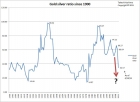
 京公网安备 11010802022788号
论坛法律顾问:王进律师
知识产权保护声明
免责及隐私声明
用户协议
京公网安备 11010802022788号
论坛法律顾问:王进律师
知识产权保护声明
免责及隐私声明
用户协议





