|
In philosophy, rationality and reason are the key methods used to analyze the data gathered through systematically gathered observations. In economics, sociology, and political science, a decision or situation is often called rational if it is in some sense optimal, and individuals or organizations are often called rational if they tend to act somehow optimally in pursuit of their goals. Thus one speaks, for example, of a rational allocation of resources, or of a rational corporate strategy. In this concept of "rationality", the individual's goals or motives are taken for granted and not made subject to criticism, ethical or otherwise. Thus, rationality simply refers to the success of goal attainment, whatever those goals may be. Sometimes, in this context, rationality is equated with behavior that is self-interested to the point of being selfish. Sometimes rationality implies having complete knowledge about all the details of a given situation.
Debates arise in these three fields about whether or not people or organizations are "really" rational, as well as whether it make sense to model them as such in formal models. Some have argued that a kind of bounded rationality makes more sense for such models. Others think that any kind of rationality along the lines of rational choice theory is a useless concept for understanding human behavior; the term homo economicus (economic man: the imaginary man being assumed in economic models who is logically consistent but amoral) was coined largely in honor of this view.
Rationality is a central principle in artificial intelligence, where a rational agent is specifically defined as an agent which always chooses the action which maximises its expected performance, given all of the knowledge it currently possesses.
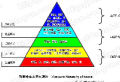
The German sociologist Max Weber proposed an interpretation of social action that distinguished between four different types of rationality. The first, which he called Zweckrational or purposive/instrumental rationality, is related to the expectations about the behavior of other human beings or objects in the environment. These expectations serve as means for a particular actor to attain ends, ends which Weber noted were "rationally pursued and calculated." The second type, Weber called Wertrational or value/belief-oriented. Here the action is undertaken for what one might call reasons intrinsic to the actor: some ethical, aesthetic, religious or other motive, independent of whether it will lead to success. The third type was affectual, determined by an actor's specific affect, feeling, or emotion - to which Weber himself said that this was a kind of rationality that was on the borderline of what he considered "meaningfully oriented." The fourth was traditional, determined by ingrained habituation. Weber emphasized that it was very unusual to find only one of these orientations: combinations were the norm. His usage also makes clear that he considered the first two as more significant than the others, and it is arguable that the third and fourth are subtypes of the first two. These kinds of rationality were ideal types.
The advantage in this interpretation is that it avoids a value-laden assessment, say, that certain kinds of beliefs are irrational. Instead, Weber suggests that a ground or motive can be given – for religious or affect reasons, for example — that may meet the criterion of explanation or justification even if it is not an explanation that fits the Zweckrational orientation of means and ends. The opposite is therefore also true: some means-ends explanations will not satisfy those whose grounds for action are 'Wertrational'.
Weber's constructions of rationality have been critiqued both from a Habermasian (1984) perspective (as devoid of social context and under-theorised in terms of social power)[1] and also from a feminist perspective (Eagleton, 2003) whereby Weber's rationality constructs are viewed as imbued with masculine values and oriented toward the maintenance of male power[2]. An alternative position on rationality (which includes both bounded rationality (Simons and Hawkins, 1949)[3], as well as the affective and value-based arguments of Weber) can be found in the critique of Etzioni (1988)[4], who reframes thought on decision-making to argue for a reversal of the position put forward by Weber. Etzioni illustrates how purposive/instrumental reasoning is subordinated by normative considerations (ideas on how people 'ought' to behave) and affective considerations (as a support system for the development of human relationships).
------cited from wiki
| 
 扫码
扫码 京公网安备 11010802022788号
论坛法律顾问:王进律师
知识产权保护声明
免责及隐私声明
京公网安备 11010802022788号
论坛法律顾问:王进律师
知识产权保护声明
免责及隐私声明









 发帖
发帖
 雷达卡
雷达卡